When you see a piece of jewelry containing a hand with a spiral in its palm, or when you watch someone perform a hand gesture in a yoga or meditation class, do you know what it means?
Our hands can carry and transmit energy, and– through body language– they can also speak for us. Thus, it’s no wonder most of the prominent spiritual traditions use some kind of hand symbol or gesture to signify a deep, powerful meaning. What do hands symbolize spiritually, and what do some of the most common hand symbols mean? Keep reading to find out!
What do Hands Symbolize Spiritually?
You’ll notice hands as a spiritual symbol popping up in countless world religions and traditions, from modern Christianity (think prayer hands) to ancient traditions such as the Chinese (who believed that the left hand signified yin energy while the right signified yang). In addition, the Japanese practice of Reiki is a hand-based practice, in which the practitioner uses their hands to transmit positive energy to the recipient.
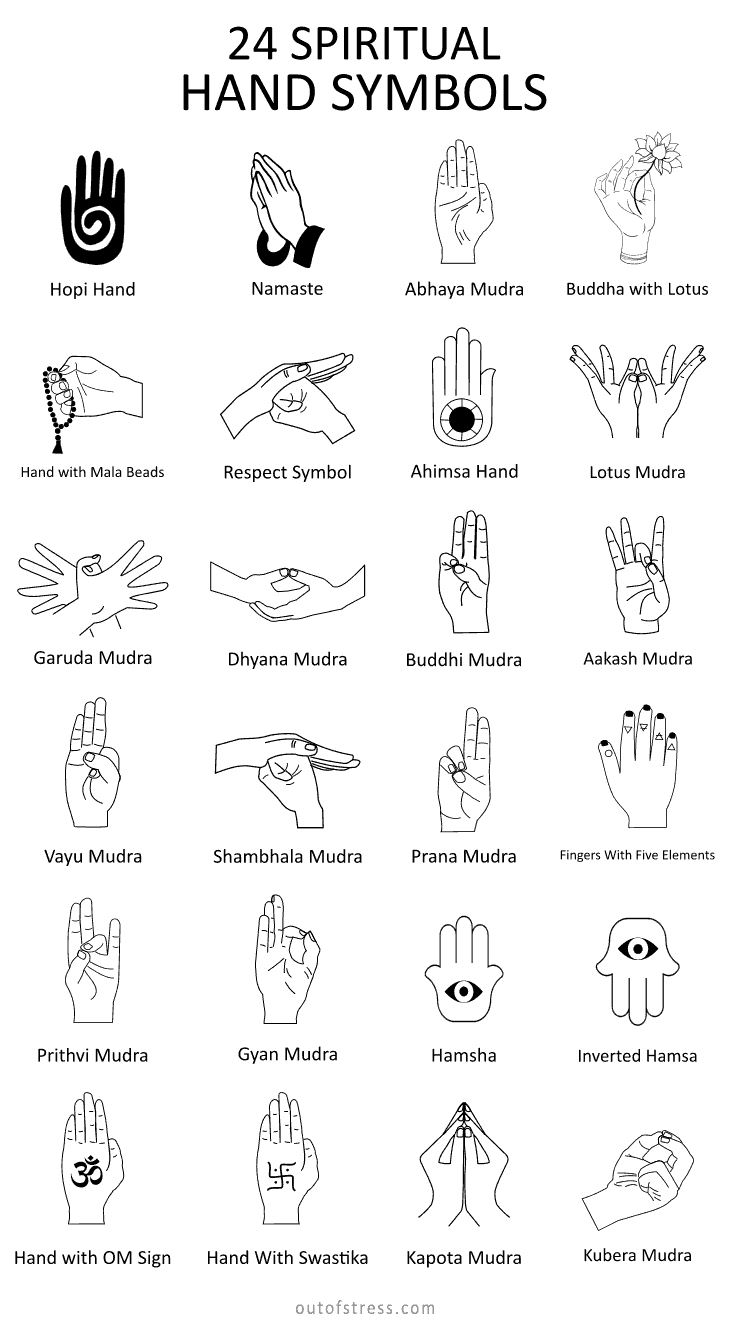
In addition to these meanings, symbols containing hands are woven throughout worldwide traditions, as well. Some of them are visual symbols, such as the Hand of Hamsa, while others are physical gestures, such as the yoga “mudras”. Let’s take a deeper look into these hand symbols, and what they mean.
17 Spiritual Hand Symbols and What They Mean
1. Hand of Hamsa
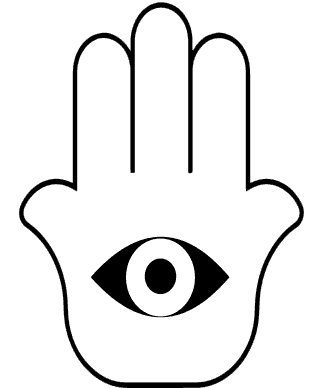
Usually pictured as an upward-facing hand with intricate designs within, the Hand of Hamsa (or Hand of Fatima) traditionally symbolizes protection. This spiritual hand symbol is so old, that it appears in several modern religions, such as Judaism, Christianity, Buddhism, and Islam. Wear or display an upright Hamsa Hand to protect yourself from negative vibrations.
2. Inverted Hamsa
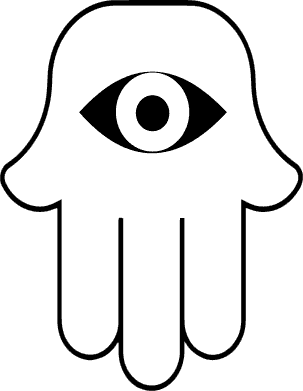
On the other hand, sometimes you’ll see a downward-facing Hand of Hamsa. Don’t be fooled– this symbol doesn’t mean the same thing as the upright Hamsa! Instead, the inverted Hamsa represents abundance. If you want to manifest more prosperity into your life (maybe you’re practicing manifestation rituals, for example), wear or display an inverted Hand of Hamsa.
One way to remember this difference is: the upright Hamsa looks like a palm stopping negativity from approaching you. The inverted Hamsa looks more like an outstretched palm saying “gimme money”.
3. Hopi Hand
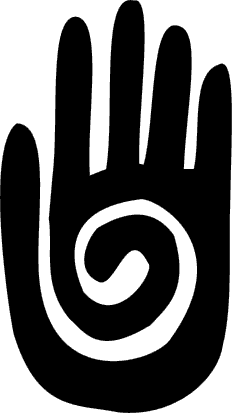
The Hopi Hand, originating from the Native American Hopi tribe of southwestern North America, looks like a hand with a spiral in its palm. The Hopi people believe that this symbol emits healing vibrations. The spiral in the middle is known to represent the Universe.
4. Abhaya Mudra
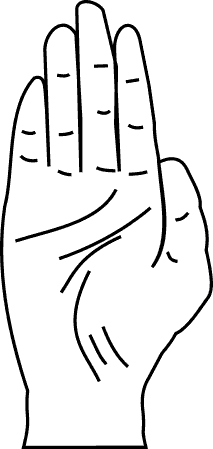
Perhaps the simplest of the mudras, the Abhaya mudra (or blessings hand) can be performed by raising your right hand, with the palm open and facing outward at shoulder height. It appears in Buddhism; it’s said that the Buddha used this mudra to prevent his relatives from arguing. As such, practicing the Abhaya mudra during meditation can help to uncover a sense of humility, as well as cloak you in strength and protection.
5. Namaste or Anjali Mudra
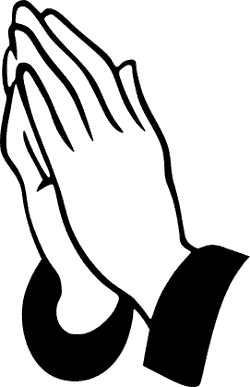
If you’ve been to a yoga class in the West, you’ve almost certainly seen the teacher raise an Anjali Mudra (palms together at the chest in prayer), followed by an utterance of the word namaste. This gesture, paired with the word namaste, is traditionally used in India as a gesture of respect to one’s elders or teachers.
The Namaste mudra also has many healing benefits like reducing stress and promoting balance and flexibility.
6. Fingers with Five Elements
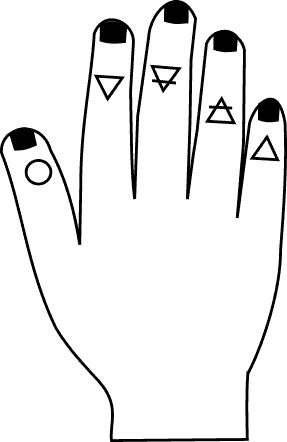
As we’ll see below with the mudras which represent the elements, each of our five fingers are connected to an element: fire for the thumb, air for the index finger, ether for the middle finger, earth for the ring finger, and water for the pinky finger. Some people like to get the symbols for each element tattooed on the corresponding finger; this can help you to connect with each of the five elements by using the mudras as outlined below.
7. Hand with Mala Beads
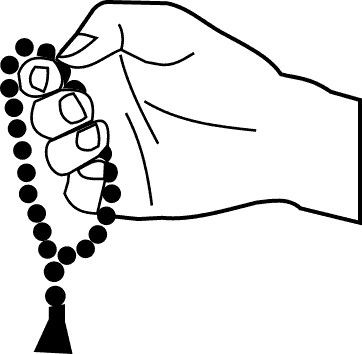
You’ll often see mala beads (necklace-like strings of beads, traditionally made of wood or crystals) in yoga studios or spiritual goods shops. Usually, they contain 108 beads, meant for reciting a mantra 108 times. Therefore, if you see a symbol of a hand holding mala beads, this can symbolize spiritual devotion. It can also signify the holy number 108, which appears in multiple world religions, from Hinduism to Jainism.
8. Lotus Mudra
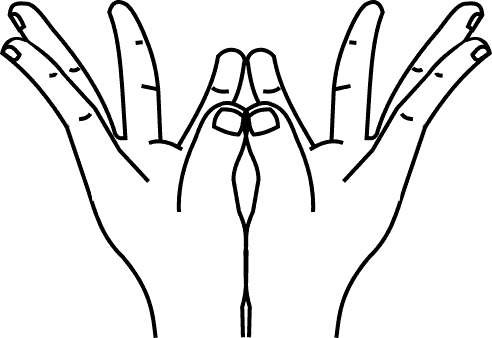
This mudra originates from Buddhist and Hindu traditions. You’ll often see yogis holding this mudra above their heads while in tree pose, or at their hearts while seated in– of course– lotus pose. Performed with the two thumbs and the two pinky fingers touching, and the rest of the fingers spread wide, the lotus mudra (which, of course, symbolizes the lotus flower) is used to open the heart center. This, in turn, amplifies our self-love and our feelings of love for other living beings.
9. Kubera Mudra
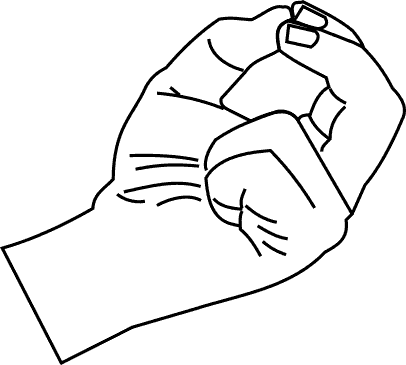
Performed by bringing the index and middle fingers to the tip of the thumb, with the other two fingers extended, the Kubera mudra pulls together the elements of fire, air, and ether. This mudra is said to attract prosperity. Thus, you might use this mudra while practicing a manifestation visualization. This mudra is named after Hindu God of wealth and good luck – Kubera.
10. Garuda (Eagle) Mudra
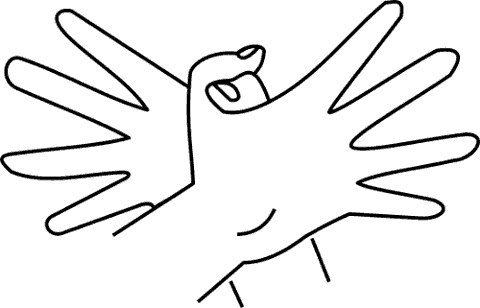
Garuda means “eagle” in Sanskrit, and as such, it helps the practitioner to feel a sense of lightness, awakening, and invigoration. Practiced by turning the palms towards the body, crossing the wrists, and linking the thumbs together, this mudra (which, of course, looks like an eagle) is said to balance the vata (or air) element in one’s body. This will help to ease any stagnancy or creative blocks.
11. Gyan Mudra
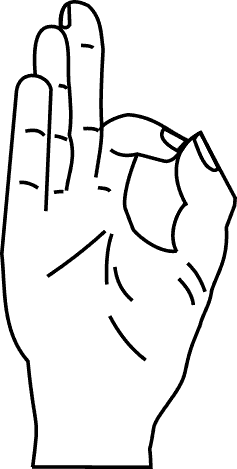
This is probably the most well-known mudra; it’s the one that has been stereotyped into, basically, “the hand gesture you make while meditating”. Made by putting the index finger and thumb together, the gyan mudra is, in fact, most often performed in seated meditation; it is said to maintain one’s focus, and keep the mind from wandering.
12. Prithvi (Earth) Mudra
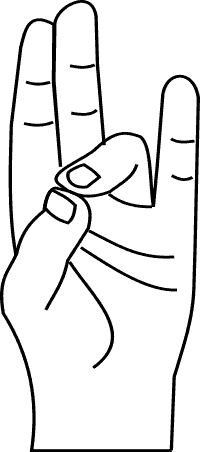
Prithvi mudra is known as the “Earth mudra” because it involves the ring finger, which is connected to the earth element. If your root chakra– which is also connected to the Earth element– is off-balance, practicing Prithvi mudra during meditation might help. Connect the tip of your ring finger to your thumb on both hands, while keeping all other fingers extended. This is said to increase your sense of groundedness and safety.
13. Prana (Life Energy) Mudra
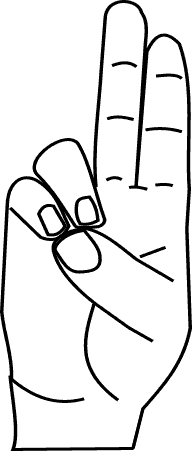
Another mudra which involves the Earth element is Prana mudra; this one combines earth, fire, and water, and is performed by bringing the thumb, pinky, and ring fingers together. Using this mudra during meditation can activate your Prana, or “life force energy”. It’s a perfect hand symbol to use when you feel lethargic or unmotivated.
14. Surya (Sun) Mudra
The Surya mudra may look exactly like the Prithvi mudra at first glance, but it actually has the opposite effect! Rather than touching the tip of your ring finger with your thumb, you’ll need to touch the first knuckle of your ring finger with your thumb to perform this one. This increases your body’s fire element, and decreases your earth element, making it perfect for increasing your confidence and activating your solar plexus chakra.
15. Vayu (Air) Mudra
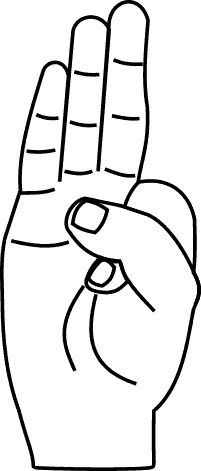
The Vayu mudra looks like the Gyan mudra, but– similar to the difference between the Prithvi and Surya mudras– it’s performed by bringing the thumb to the knuckle of the index finger, rather than the tip of the index finger. It helps to decrease the air element in the body. This is good for those struggling with anxiety or sleep interruptions.
16. Akash (Space) Mudra
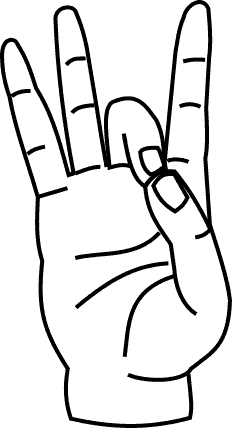
To balance your ether (or space) element, you might want to practice the Akash mudra. What is the ether element? It connects us to the divine, our higher selves, and the Spirit world (think crown chakra opening). Practicing this ether-balancing mudra can help you with prayer, listening to your spirit guides, and connecting to the Universe. To practice the Akash mudra, touch the tips of your thumbs to the tips of your middle fingers on both hands.
17. Buddhi (Wisdom/Knowledge) Mudra
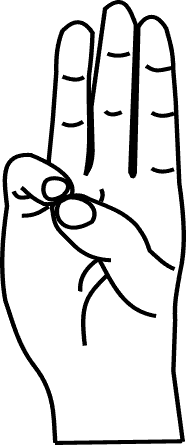
Finally, if you need to balance the water element in your body (i.e., if you’re struggling to connect to your feminine, intuitive side), you might want to practice the Buddhi mudra, wherein you touch your thumbs to the tip of your pinky fingers on both hands. The pinky symbolizes the water element, and so, practicing the Buddhi mudra is said to help you clearly hear your intuition.
In Conclusion
From balancing the five elements to warding off evil, our hands can help us in ways you may not have even realized. Hopefully, you found a hand symbol in this article which resonates with you– and furthermore, next time you see that symbol in a yoga studio or metaphysical shop, you’ll know exactly what it means! Feel free to try out various symbols to find the one that you like best, and remember to listen to your intuition above all.