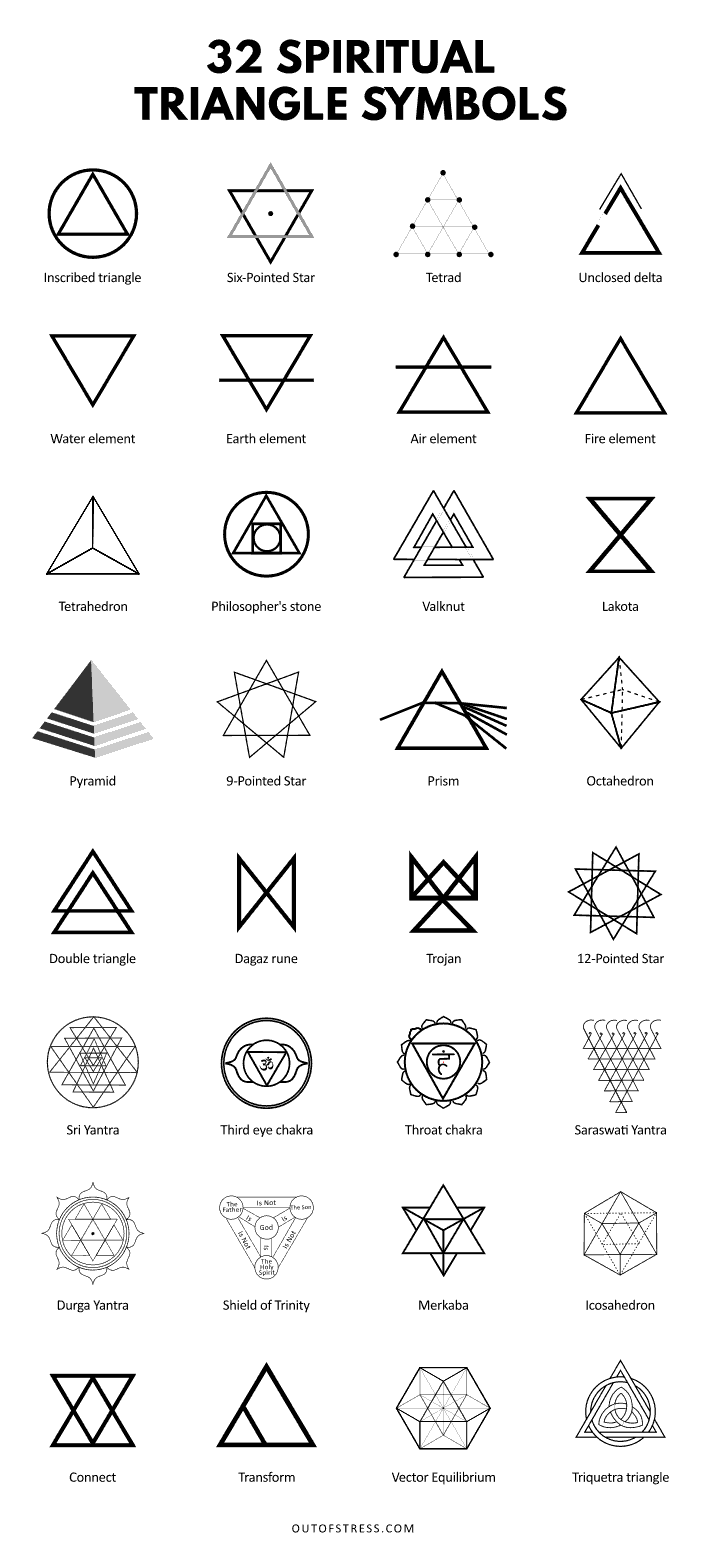
The triangle has been used as a symbol of spiritualism and enlightenment since the dawn of human civilization. In this article let’s look at 28 spiritual triangle symbols and their meaning and their significance to cultures around the world. If any symbol(s) in this list resonates with you, you can use it in your life to help you in your own spiritual journey.
What do triangles represent?
Triangles are wide at the base and taper to a point at the tip. Therefore, they symbolize the stages of growth that ultimately lead to enlightenment.
The three points of a triangle are also significant but their meanings differ slightly between religions. The Christian holy trinity, which represents the Father, Son, and Holy Spirit, is perhaps the most well-known of these. Similar versions can be found in Hinduism and Paganism to represent the Divine in its threefold nature. Other popular meanings of the three triangle points include the mind, body, and spirit, as well as the past, present, and future.
Wherever you look, you will see the number three reflected in nature, making triangles the ultimate symbols of completeness.
39 spiritual triangle symbols
1. Equilateral triangle inside a circle
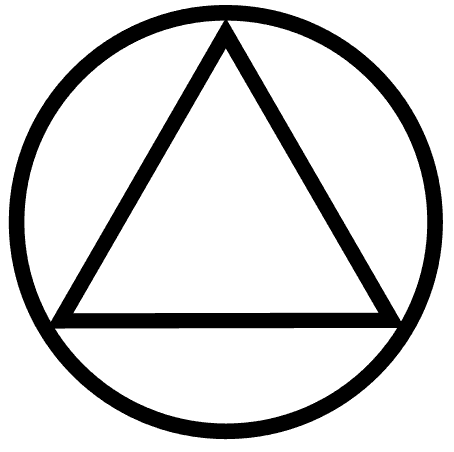
The equilateral triangle is a well-known Deity symbol that has been used by nearly every religion since Ancient Egyptian times. Since all sides of the triangle are equal, it represents balance and harmony. Traditionally, the upward-facing equilateral triangle represents the Divine Masculine, associated with the elements of Fire and Air, while the downward-facing triangle embodies the Divine Feminine, linked to the elements of Earth and Water. Moreover, the triangle pointing upwards conveys ascending consciousness and enlightenment, whereas the one pointing downwards signifies stability and being grounded.
The three sides of the triangle are often used to represent the various trinities of existence such as:
- Mind, Body, & Spirit.
- Father, Son, & Holy Ghost.
- Creation, Preservation, & Destruction.
- Past, Present, & Future.
- Childhood, Adulthood, & Old age.
- and so on.
The addition of a complete circle is said to represent unity, interconnectedness, and eternity. As a whole, the symbol represents creation within the circle of eternity – it symbolizes life itself.
2. Six-Pointed Star
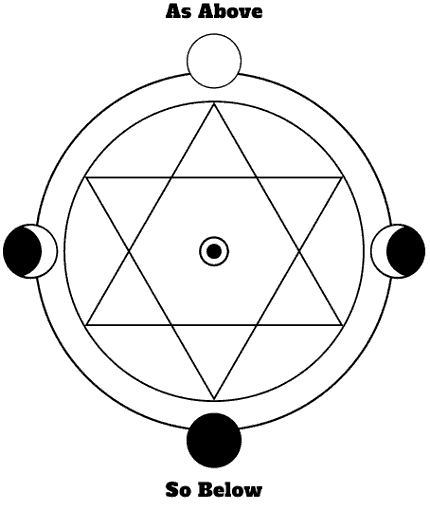
The Six-Pointed Star consists of two overlapping equilateral triangles, one facing upward and the other facing downward. This ancient triangular symbol represents the union of opposing energies which is the basis of all creation. The upper triangle represents the divine masculine and the downward triangle represents the divine feminine. The dot in the center (Bindu) is believed to signify the highest level of consciousness that can be achieved, and the point from which all creation began.
This symbol also represents the Anahata (heart) chakra, the Four Elements (Fire, Air, Water, and Earth), and the Principle of Correspondence (As Above, So Below).
The Six-Pointed Star is also known as the Star of David in Judaism and the Shatkona in Hinduism.
3. Four element symbols of Alchemy
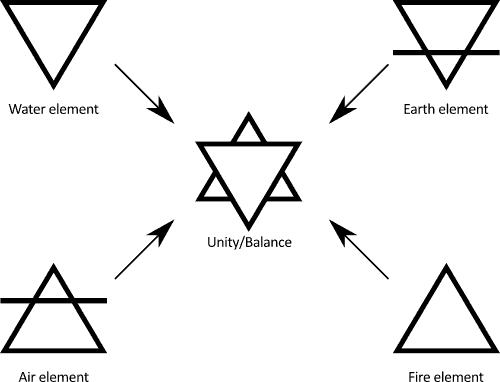
Triangles are also used to represent the four elements (in Medieval alchemy) – Earth, Water, Air and Fire.
Earth and Water are represented using downward facing triangles as they are traditionally feminine whereas Air and Fire are represented using the upward facing triangles as they are traditionally masculine (and raise upwards). The downward facing triangle symbolizes staying grounded, and the upward facing triangle symbolizes raising your consciousness. When the four elements combine they form a perfect balance which is what existence is all about.
As you can see from the above image, the four triangles converge to form the Six-Pointed Star (as discussed earlier).
4. 9/3 Nine-Pointed Star
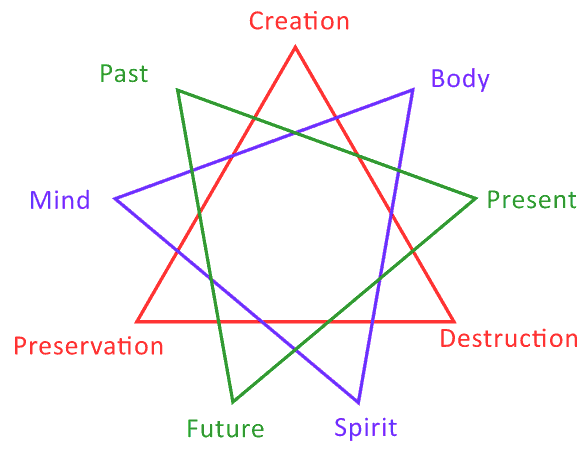
Much like the six-pointed star (that we saw earlier), which consists of two overlapped triangles, the 9/3 (or Order 3) 9-Pointed Star is formed by three overlapping equilateral triangles. This powerful symbol represents the interconnection between the various important triads of existence as follows:
- The first triangle symbolizes the foundational forces of Creation, Preservation, and Re-creation (Destruction).
- The 2nd triangle represents the trinity of Mind, Body, and Spirit.
- The 3rd triangle represents – Past, Present, and Future, or the continuum of time.
Together, these triads underpin the essence of existence, making the 9/3 9-pointed star a powerful symbol of life and creation.
5. 12/4 Twelve-Pointed Star
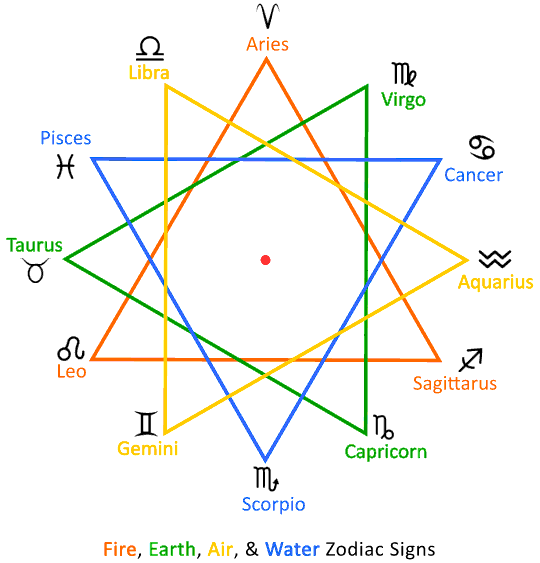
The 12/4 12-pointed star, composed of four overlapping triangles, symbolizes the 12 Zodiac signs grouped by their respective elements:
- Fire signs: Aries, Leo, Sagittarius
- Earth signs: Taurus, Virgo, Capricorn
- Air signs: Gemini, Libra, Aquarius
- Water signs: Cancer, Scorpio, Pisces
Thus, this star serves as a vivid representation of the Zodiac’s alignment with elemental forces.
6. Tetrahedron
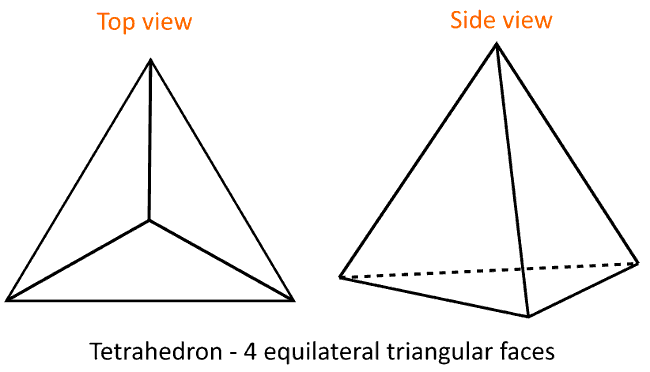
The tetrahedron, often referred to as the triangular pyramid (as it contains three triangular sides and a triangular base), symbolizes the element of fire. It is also one of the 5 platonic solids, so all its faces are of the same size and shape and all its vertices look exactly the same. Also, in comparison to the other platonic solids, the tetrahedron is special as all its vertices are equidistant from each other.
Thus the tetrahedron is a powerful triangular symbol of strength, stability, balance, and harmony.
7. Merkabah
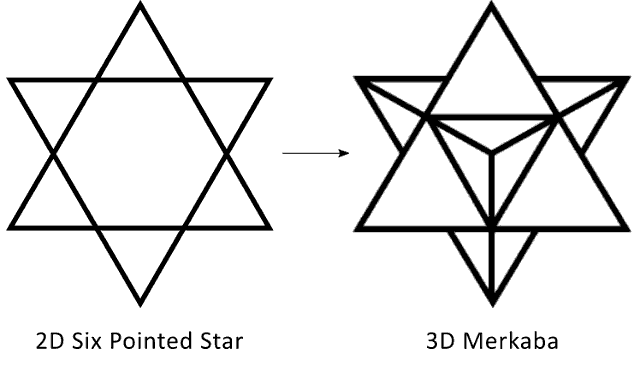
and Merkabah (Star Tetrahedorn)
The Merkabah (derived from the Hebrew word for “chariot”), also known as the star tetrahedron, is a 3D representation of the six-pointed star (that we saw earlier). It is formed by two intersecting tetrahedrons: one pointing upward symbolizing the divine masculine and the element of fire and the other pointing downwards, representing the divine feminine and the element of water.
The union of these tetrahedrons signifies the coming together of opposing forces that is the basis of all creation.
Meditating on the Merkabah is believed to raise one consciousness allowing one to transcend the material world and reach higher spiritual realms.
8. Octahedron
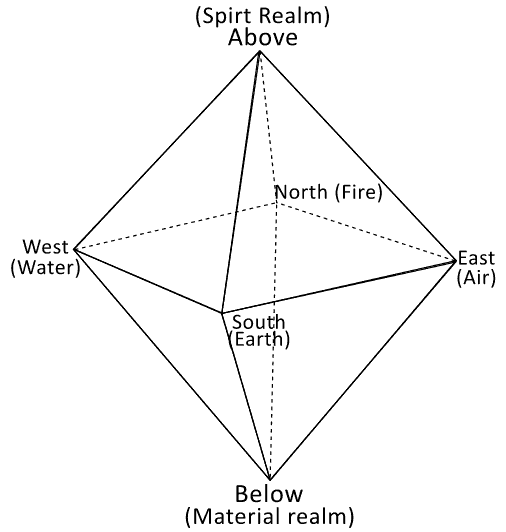
The Octahedron, one of the five Platonic solids, is composed of two Square Pyramids (or Polyhedrons) fused together. It contains 8 equilateral triangular faces and is symbolically linked to the element of air. Its upper and lower points signify the spiritual and material realms, respectively. The square base formed by the convergence or the two Polyhedrons symbolizes the fundamental four elements: Fire, Air, Water, and Earth.
Thus the Octahedron is a powerful symbol that represents reflection, balance, duality, life energy, and creation.
9. Icosahedron
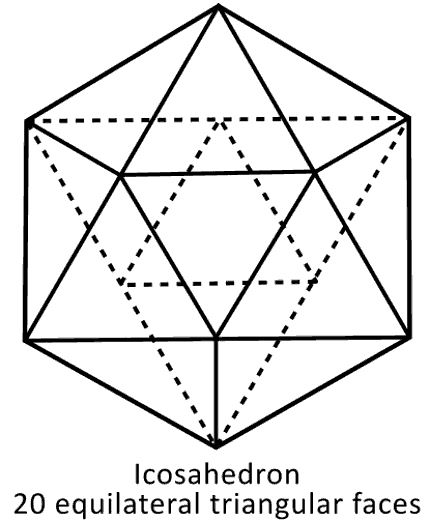
Like the Tetrahedron and Octahedron, the Icosahedron is also a Platonic solid. It has 20 equilateral triangular faces. Symbolically, the Icosahedron is associated with the element of water.
Its multifaceted nature suggests flow and movement, much like the constantly changing tides of water. In spiritual contexts, the Icosahedron is thought to represent letting go, going with the flow, creativity, and the interconnectedness of all living things.
10. Sri Yantra
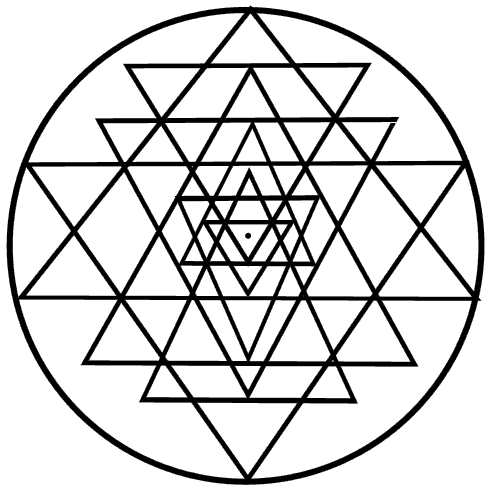
The Sri Yantra is an ancient Hindu symbol, composed of nine interlocking triangles. The four triangles pointing upwards represent Shiva (masculine energy), while the five triangles pointing downwards represent Shakti (feminine energy). Together, they form a powerful symbol of unity, balance, higher consciousness, creation, and creative energy.
In Hinduism, Yantras are revered geometric symbols. Meditating while focusing on the Yantra’s center is believed to elevate the practitioner’s consciousness to higher realms. There are many Yantras in Hinduism and most of them feature triangular symbols. We will discuss a few more important Yantras later in this article.
11. Manipura chakra symbol
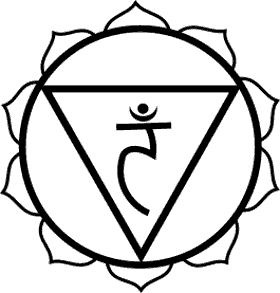
The Manipura chakra symbol is an inverted red triangle surrounded by ten petals and enclosed in a bright yellow circle. It refers to the solar plexus which is closely associated with personal power and self-esteem. The ten petals (or pranas) symbolize the ten vital forces that nourish all functions in the human body. The Manipura chakra is a powerful symbol of purification and transformation that can help us find our true sense of purpose.
12. Vishuddha chakra symbol
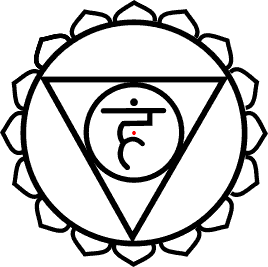
According to Tantra tradition, the Vishuddha chakra (Sanskrit for “throat”) is the fifth primary chakra. Its primary color is aquamarine, and it has 16 petals that represent human characteristics (Vrittis) such as compassion and pride. The throat chakra governs expression, communication, and personal growth. Its name means ‘purest’ as it is the energy center that is believed to purify our mind, body, and spirit.
13. Third eye chakra symbol
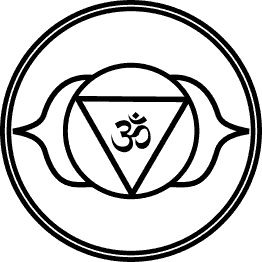
The third eye symbol is revered in Indian spiritual traditions because it is regarded as the doorway to the Divine. Located between the eyebrows, this chakra can bring harmony to your mind, body, and spirit. The symbol consists of an OM (meaning universe and unity) atop an inverted triangle and a lotus flower (symbolizing enlightenment).
14. Valknut
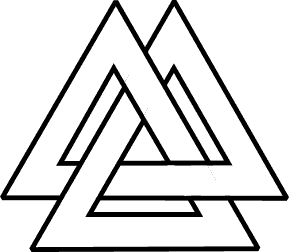
The Valknut (knot of the slain), is a mysterious Nordic symbol made up of three interlocking triangles. It is believed to represent fertility and rebirth. This symbol was also used to represent the power of Viking practitioners and shamanists, who were said to be able to control people’s minds and bind their fates.
The three interlocking triangles can represent the connection between Earth, Hell (the underworld), and the Heavens. They might also signify the past, present, and future, or the three realms of existence in Norse beliefs: Asgard (realm of the gods), Midgard (realm of humans), and Utgard (realm of giants).
The Valknut is also associated with Odin, the chief god in Norse mythology. Odin was the God of war and was considered the protector of heroes.
15. Durga Yantra
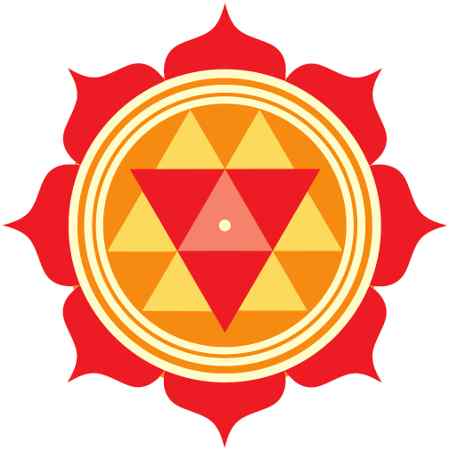
Another prominent Yantra in Hinduism apart from the Sri Yantra (that we discussed earlier) is the Durga Yantra
It represents Goddess Durga, revered as the universal mother and source of all creation.
This Yantra is made of 4 overlapping triangles, 3 facing upwards and one downwards. Together, they form a nine-pointed star. The three upward-facing triangles represent the three primal forces of Creation, Preservation, and Destruction. The one downward-facing triangle represents the divine feminine and the manifestation of sprit within the material world.
These four triangles converge to create another smaller upward-facing triangle at the center. This smaller triangle represents the Divine Mother or Goddess Durga. The Bindu or dot at the center represents the Source of all creation.
16. Shield of Trinity
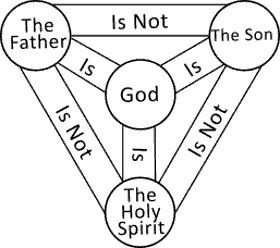
The shield of trinity, (scutum Fidei), is a traditional Christian symbol that depicts the Holy Trinity. The classic shield consists of a downward triangle with the Latin words Pater (Father), Filius (Son), and Spus scus (Holy Spirit) on each point. In the center of the symbol is Deus (God). It is intended to represent each of the entities that comprise the ultimate deity, as well as the eternity of the Holy Trinity.
17. Lakota symbol
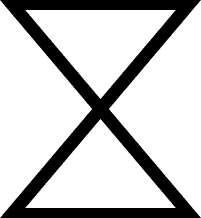
The Lakota symbol is revered in the indigenous cultures of North America. In fact, the name is derived from a powerful tribe that lived in the Great Plains.
The Lakota symbol represents the concept of earth-sky mirroring that was used to guide tribes on their travels. The top triangle is believed to represent the sun and the stars, while the bottom triangle represents the earth. It is actually a three-dimensional shape, as the earth was believed to be cone-shaped.
18. Tetrad (Tetractys) symbol
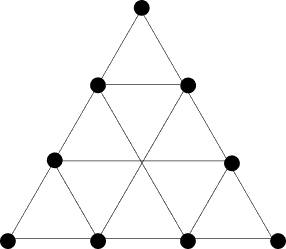
The Tetrad or Tetractys is composed of ten dots arranged in a triangle. It was created by the famous Greek mathematician and philosopher Pythagoras. The Tetractys is thought to represent the sacred geometry that shapes our universe, particularly the four elements of earth, air, fire, and water. In Kabbalah, the Tetractys symbol is also closely associated with the tree of life.
19. Pyramids
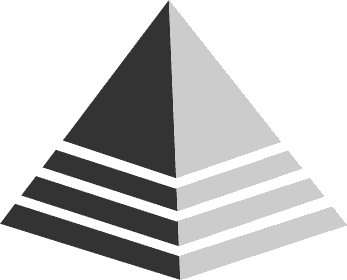
Pyramids are thought to be powerful energy centers. Many scholars believe that the Egyptian pyramids were built as healing chambers rather than tombs because they can channel energy from higher realms. Sitting inside a pyramid (or holding a pyramid-shaped crystal), is said to help balance your energies and recharge your aura.
20. Dagaz rune
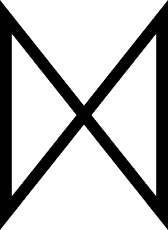
The Dagaz rune, meaning ‘day’, is the last rune of Elder Futhark. It is a powerful symbol of spiritual awakening and enlightenment. This rune is considered extremely positive because it represents bold change, opportunities, and the cycle of life. If you are going through a difficult time, this rune serves as a reminder that life is in constant flux – things will improve!
21. Two superimposed triangles
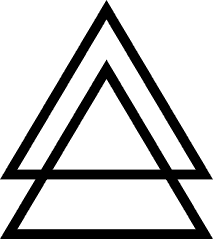
Double triangle symbols have become incredibly popular as tattoos. The three points represent your spiritual journey as well as your, past, present, and future. For Pagans, the three points can also represent the three phases of the moon. Triangles pointing downwards are a universal symbol of fertility and female empowerment. Triangles pointing upwards represent masculinity and the fire element.
22. Unclosed delta symbol
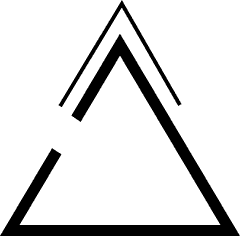
The unclosed delta symbol is a representation of change. It reminds us that life is in constant motion, that new opportunities will present themselves, and that we should strive to move forward rather than look to the past.
23. Prism
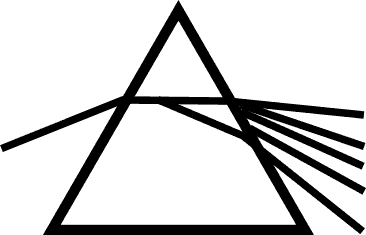
When you shine white light through a prism, it gets scattered and you get to see all the seven colors which were hidden in the white light. This way, a prism is a spiritual symbol that represents enlightenment or seeing through the illusion.
24. Saraswati Yantra
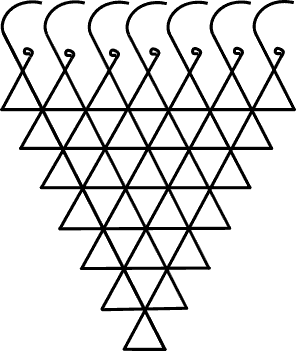
The Saraswati Yantra is an auspicious symbol associated with Hindu Goddess Saraswati who is the Goddess of Wisdom, Education and Intelligence. The symbol consists of a series of triangles that represent her vast knowledge of the universe. The symbol that starts with a single upward facing triangle and goes into infinite triangles representing the infinite knowledge present in the universe and the fact that learning is endless. Meditating on this symbol is said to enhance memory power, concentration, creativity, intuition and wisdom.
25. Philosopher’s stone
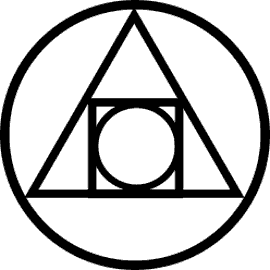
The Philosopher’s Stone is an ancient alchemical symbol that is illustrated as a circle within a square, encased by a triangle, and then encompassed by a larger outer circle.
The legendary substance is believed to be able to turn any base metal into gold and has even been hailed as the elixir of life, capable of granting immortality. The symbol itself contains the four basic elements; earth, air, fire, and water, with the inner circle representing water, the square representing earth, the triangle representing fire and the space representing air. The surrounding circle is thought to symbolize the fifth element, which is present within the other four elements.
The Philosophers Stone is said to have the power to transform base metals like lead into gold. In that sense, it encourages you to balance your own inner divine energies so you can transmute that which is not needed to that which is helpful to your growth.
26. Triangle pose
The Triangle pose, known as “Tri-kona-asana” in Sanskrit (with “tri” meaning “three,” “kona” meaning “angle,” and “asana” meaning “pose”), is a fundamental standing pose in many yoga traditions.
It stretches and opens the hips, hamstrings, chest, spine and shoulders, and helps improve overall strength, balance and stability.
27. Winter Triangle
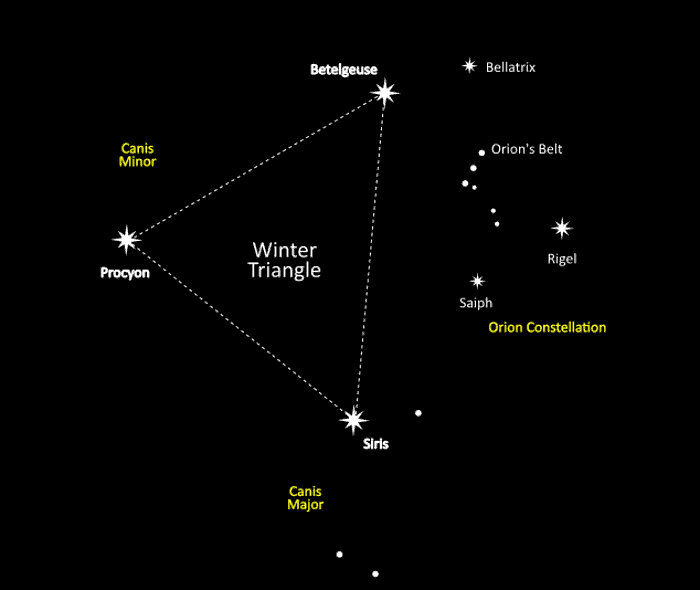
An important triangular symbol related to astrology is the Winter Triangle. It is a pattern of stars (known as asterisms) visible in the night sky between the months of January and March.
This triangle is formed by connecting three luminous stars from three distinct constellations, creating a clear triangular pattern against the backdrop of the night sky. These stars are as follows:
- Betelgeuse from the constellation Orion (the Hunter).
- Procyon from the constellation Canis Minor (the Lesser Dog).
- Sirius from the constellation Canis Major (the Greater Dog).
The Winter Triangle symbolizes transition, and renewal because of its appearance during the coldest months of winter and the promise of spring’s arrival. It also symbolizes interconnection and unity as it features three stars from three different constellations. Finally, the stars also represent guidance as they were used as symbols of guidance during the dark winter months by sailors and travelers to reach their destinations.
28. Summer Triangle
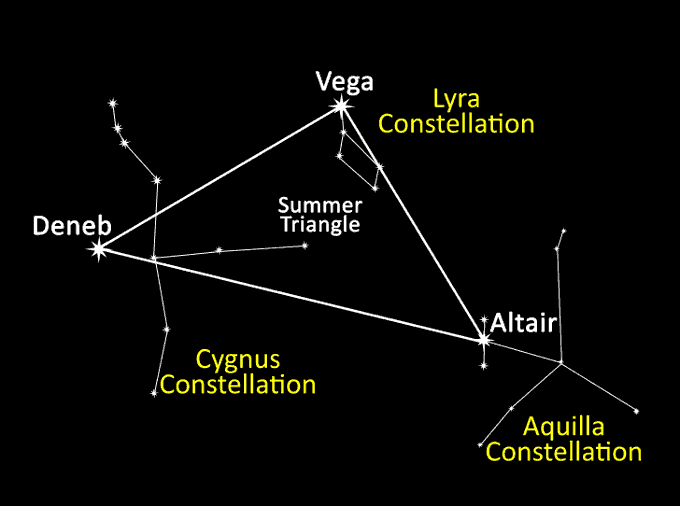
Another important triangular symbol in astrology is the Summer Triangle.
Similar to the Winter Triangle the Summer Triangle is a pattern consisting of three bright stars (that when connected form a triangle) visible between the months of June through October in the Northern Hemisphere. The stars that form the Summer Triangle belong to three different constellations as follows:
- Vega from the constellation Lyra (the Harp).
- Deneb from the constellation Cygnus (the Swan).
- Altair from the constellation Aquila (the Eagle).
Since it is visible during the summer months, the Summer triangle symbolizes celebration, growth, and Abundance.
Also, similar to the Winter Triangle, it also signifies balance, unity, and Harmony as it features three stars from three different constellations.
29. Vector Equilibrium (Cuboctahedron)
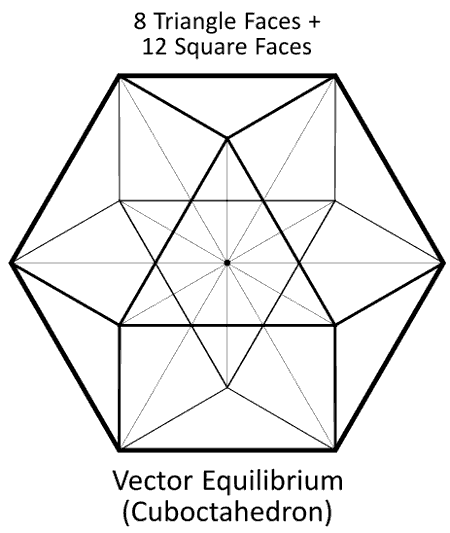
The Cuboctahedron also known as the Vector Equilibrium is considered one of the most balanced 3D forms. It contains 8 triangular faces and 6 square faces and has 12 exactly identical vertices where 2 triangles and 2 squares converge. It also has 24 edges each separating a triangle from a square.
What’s special about this shape is that each one of its points is at the same distance from the center making it the only Geometric Form where all forces are equal and balanced.
Interestingly by folding along its square sides, this shape can also be transformed into other balanced and symmetrical shapes like the icosahedron, octahedron, and tetrahedron. Thus the vector equilibrium is the perfect symbol symbolizing balance, unity, and harmony.
30. Three Fishes Symbol
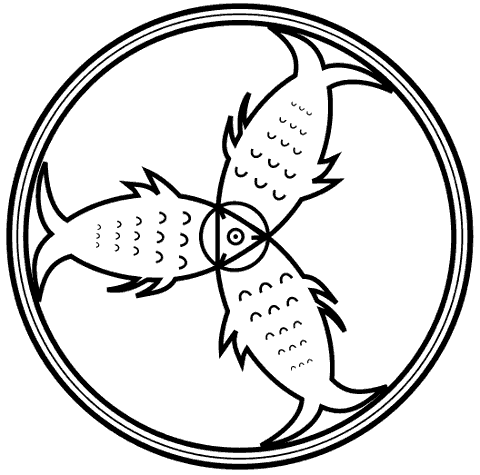
The Three Fishes symbol, depicting three fish converging to share a single head, is an ancient emblem found across various cultures, including Christianity, Islam, Hinduism, and Buddhism. The meeting point of the fish forms an equilateral triangle, with the triangle’s center marking the fish’s eye.
This symbol primarily represents the concept of trinity and significant life triads such as Creation, Preservation, and Destruction (or re-creation).
31. Three Hares Symbol
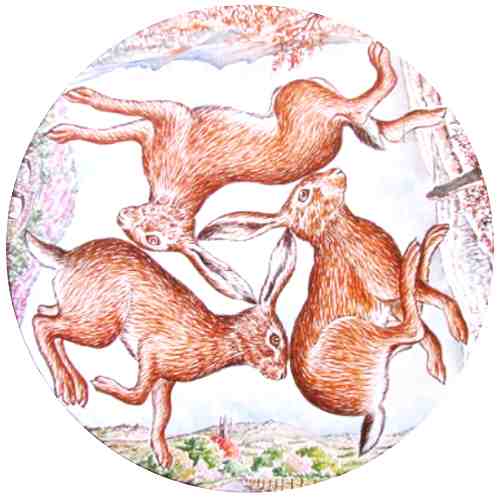
Similar to the Three Fishes symbol is the ancient emblem of three hares, where the creatures are interconnected by their ears, forming an equilateral triangle. Found across various cultures, this symbol, akin to the three fish, signifies the concept of the trinity and the fundamental triads underpinning existence.
32. Radegast symbol
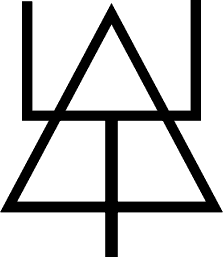
Radegast is the Slavic God of strength, hospitality, and honor. He was the main God worshipped by the West Slavic tribe of the Redarians and is usually depicted as a black figure with a bird on his head. He is credited with being the reason behind the legendary Slavic hospitality, in which everyone who crossed the threshold was welcomed inside.
33. Veles
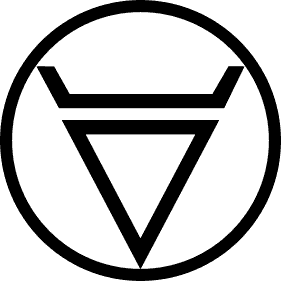
Veles is the Slavic God of livestock and the underworld. His symbol is an upside-down triangle with a horizontal line running above it, representing cattle horns. According to Slavic mythology, Veles is also considered to be the guardian of the gates to heaven, which separate the physical world from the spiritual world. He is closely associated with personal accountability, wisdom, and determination.
34. Trojan Slavic symbol
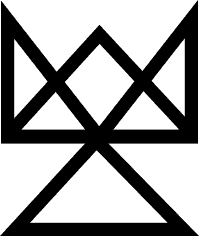
The Trojan symbol represents the three Slavic Gods; Svarog, Perun, and Veles, who rule the heavens, the earth, and the underworld. This symbol is also believed to represent the three elements of air, water, and earth, or symbolize the past, present, and future.
35. Kanatitsa
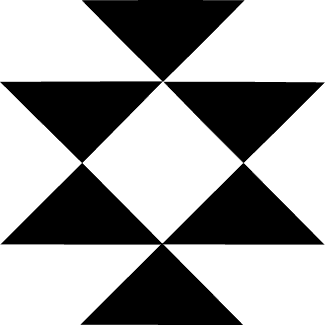
Kanatitsa is an ancient Bulgarian symbol that features a set of three standing triangles and three inverted triangles. The symbol represents longevity, eternal life and protection from negative energy.
36. Heaven MU symbol
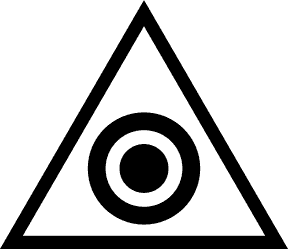
The Heaven MU symbol is thought to have originated as an Ancient Mayan hieroglyph. Some scholars even believe Mu to be an island that was inhabited by a technologically advanced race. The Heaven MU symbol is said to represent heaven and the all-seeing eye of the Triune God.
37. Dragon’s eye
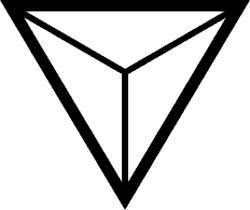
The Dragon’s eye is an ancient Germanic 2D symbol that consists of an equilateral triangle and a ‘Y’ in the middle connecting the three points of the triangle. The triangle represents life and the ‘Y’ represents the choice between good and evil.
38. Zhiva
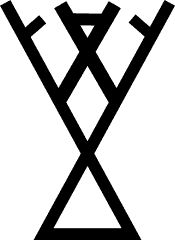
Zhiva is an ancient Slavic Goddess of life, love, marriage, relationships and fertility. The symbol of the Goddess consists of two opposing triangles signifying the heaven and earth.
39. Sign of Tanit
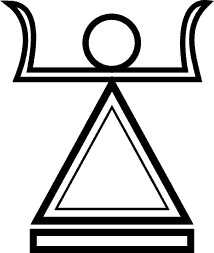
The sign of Tanit has been discovered on many ancient stone carvings. Its basic shape is a disk on top of a triangle, separated by a horizontal line. It was said to represent the mother Goddess of fertility, Tanit. She was revered as one of the most important Deities by Carthaginians and was frequently invoked for matters relating to fertility and children.
Conclusion
The triangle is a universal symbol of enlightenment, strength, and healing. All of the symbols mentioned above, remind us of our own personal power and that everything in the universe is interconnected. So, next time you feel down or worthless, invoke the power of the triangle to remind you of your inner divinity.