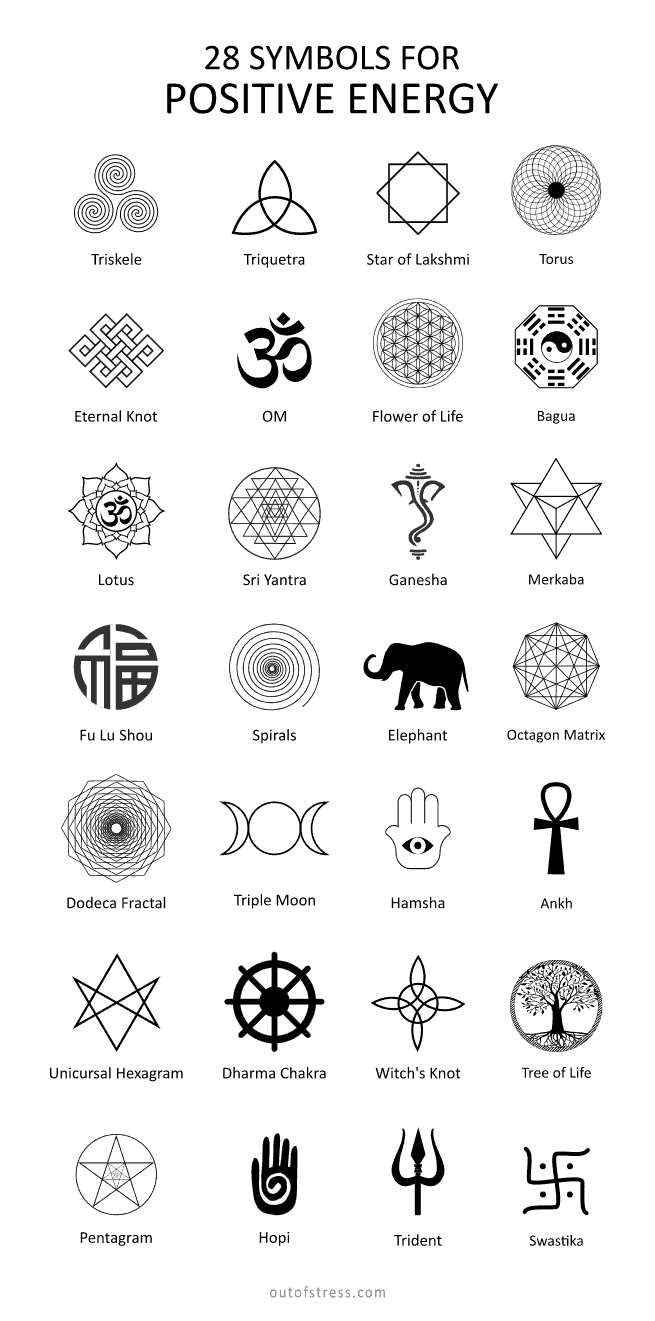
Symbols are powerful as they can communicate directly with your subconscious mind. It’s no wonder that religions and cultures across the world have always used symbols in order to feel closer to the divine and invoke positive changes.
In this article, let’s look at 16 powerful symbols that you can use in your life to attract positive energy, protection, good luck and prosperity.
1. OM Symbol
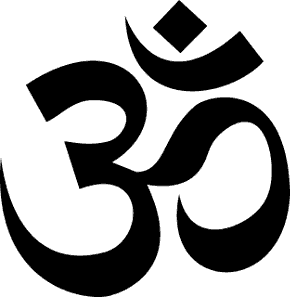
OM (or Aum) is considered sacred as both a sound and a symbol. Its origin is based in Hinduism however it has also been adopted by a number of other religions such as Sikhism and Buddhism. The symbol itself is a combination of three Sanskrit letters A, U, and M, which represents the union of mind, body, and spirit.
It is believed that the vibration of the OM sound was responsible for the creation of the whole universe and consciousness itself. All major religions recognize this vibration but each religion has their own name for it. For example, in Christianity it is known as ‘Amen’.
2. The Lotus Flower
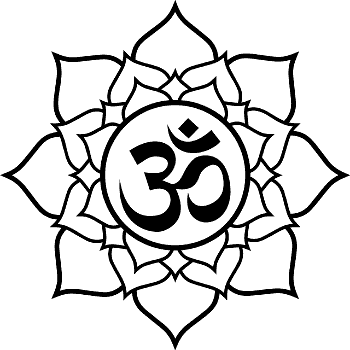
The Lotus flower is a powerful symbol of spiritual enlightenment and perseverance. This symbol has been used across several cultures but its origin dates back to Ancient Egyptian times. Because lotus flowers close up at night and open in the morning, they were often used to symbolize the idea of resurrection and were closely associated with the Sun God Ra.
This beautiful flower has its roots in the mud, yet blooms above the water into a pure untainted flower. This flower is a constant reminder that you have the power to raise above challenges and become your greatest version.
3. Fu Lu Shou
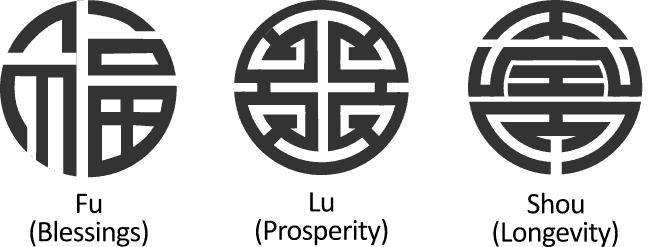
Statues of Fu Lu Shou, also known as the Three Star Gods, are displayed in millions of homes and workplaces around the world, due to their famed symbolism of happiness (Fu), prosperity (Lu) and longevity (Shou).
Their origin can be traced back to the Ming Dynasty when the Gods of the three stars were said to have presented themselves in human form for the first time, and are still the most commonly depicted deities in China today. Traditionally, the statues are arranged with Fu on the right, Lu in the middle, and Shou on the left, and are said to perform better if placed on a high shelf.
4. Star of Lakshmi
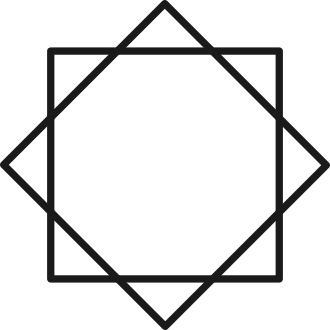
The Lakshmi Star is an Octagram, or an eight-pointed star; if you observe this symbol, you’ll notice that it contains two squares put together. Its eight points represent eight different forms of wealth, which are: monetary, ability to transport, endless prosperity, victory, patience, health and nourishment, knowledge, and family.
5. Elephants
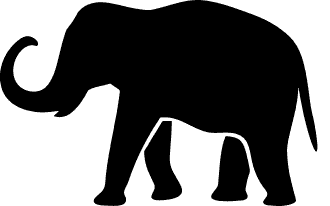
Picture an elephant showering water out of its massive trunk; this symbolism is said to depict the elephant’s spirit of prosperity and good fortune. An elephant with its trunk raised, whether it’s presented as a statuette, tapestry, or in some other form, is said to bring luck when placed in your home.
6. Torus symbol
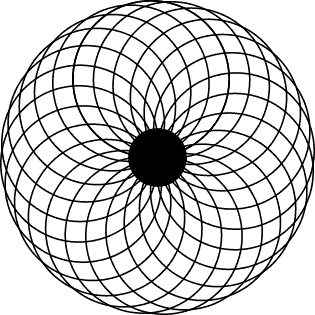
A basic sacred geometry symbol, humankind has found the Torus in structures as small as atoms and as massive as galaxies. It’s also been said that the human aura presents itself in the spiraling shape of a Torus. Due to its appearance in all things big and small, the Torus is said to represent unity and oneness.
7. Flower of Life
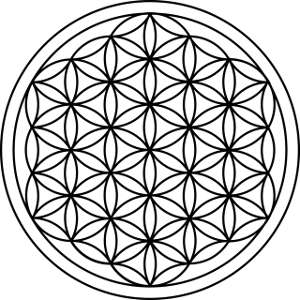
The Flower of Life consists of nineteen circles, which overlap in perfect symmetry. This positive symbol, like many others on this list, originated in ancient times. Though it came about long before the invention of microscopes or telescopes, we now know that the Flower of Life resembles atomic structure; similar to the Torus, the Flower of Life is said to stand for existence itself and the basic structure of all of life.
8. Triskele
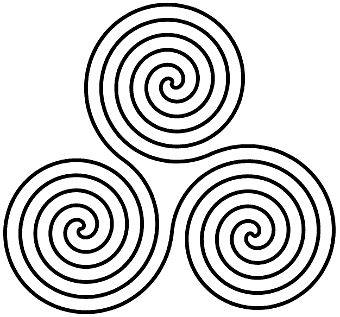
“Triskele” translates from Greek to “three legs”; as such, the Triskele is a symbol consisting of three interlocking spirals. Due to its triplicate nature, the Triskele represents multiple “threes”: life/death/rebirth and maiden/mother/crone (the triple goddess) are just a few examples.
Thus, this ancient Celtic symbol reminds you to be at peace with everything in and around you. It gives you strength and positive energy to let go and accept the core nature of the universe.
9. Infinite Knot
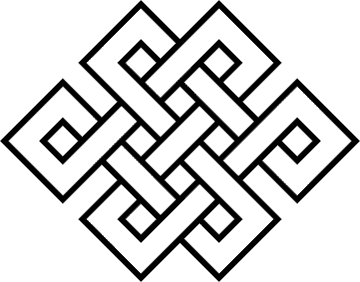
Also known as the Eternal Knot or the Endless Knot, this symbol appears as a twisting figure with no beginning or end. As such, it represents nonduality, or the notion that you are one with everything in the Universe– both before, during, and after your life on Earth. It reminds you that you are infinitely powerful and helps raise your energy to higher levels.
10. Mandalas
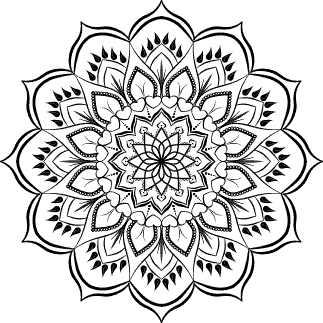
Mandala, a Sanskrit word, literally translates to “circle”. Not only do these intricate circles represent oneness or non-duality– again, the knowledge that you are one with everything in existence– they’re also said to help access inner knowledge during a meditative state. Some swear by these designs, staring at them during meditation to gain massive insights.
11. Merkaba
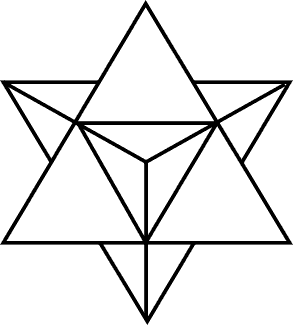
The Merkaba looks like two spinning tetrahedrons; it is said to represent a spinning energy field centered in the human body. When you meditate, practice yoga, or do breathwork, you activate this spinning energy field. The radiant Merkaba elevates our human consciousness and energy to higher dimensions.
12. Ganesha
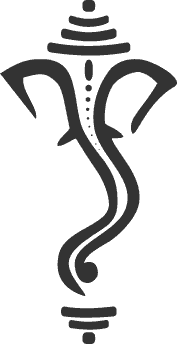
Yet another sacred elephant from Hindu culture, Ganesha is actually a deity, who protects human beings as they undertake new beginnings. In the jungles of India, the massive elephants are known for taking down trees and clearing paths in the forests. Keeping a Ganesha symbol at home is said to help clear life’s obstacles out of your way and attract positive energy when you start something new.
13. Bagua
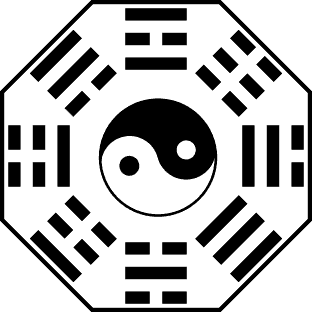
If you’ve ever used Feng Shui to arrange objects in your home, you may have heard of the Bagua, or the Feng Shui energy map. Similar to the Lakshmi Star, it also contains the number eight, as it separates the home into eight segments: career, spiritual growth, health, money, fame, love, creativity, and helpful people. This energy map, when used properly, can help you to draw abundance and positivity into your space.
14. Spirals
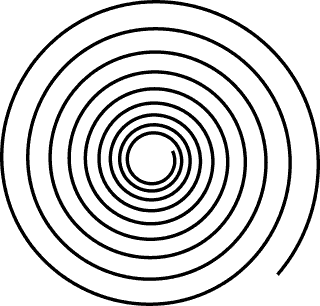
Spirals represent awakening, wisdom, evolution, connection with higher energy and enlightenment. They can be looked at as a winding stairway that takes you down the rabbit hole from the outer world to the infinite inner world. They also represent the connection between the conscious and subconscious. When you get in touch with your inner self, you begin your journey of enlightenment and connection with higher energy.
15. Unicursal Hexagram

A hexagram (or a six pointed star) is drawn by intersecting two equilateral triangles. So you will need to draw two different triangles to get the shape. But a Unicursal Hexagram is different because it can be drawn in one continuous line.
This powerful symbol of positivity (which is also hidden within the Flower of Life symbol) represents the union of the conscious and the unconscious, the form and the formless and the connection between inner and outer realities.
16. Doceda Fractal
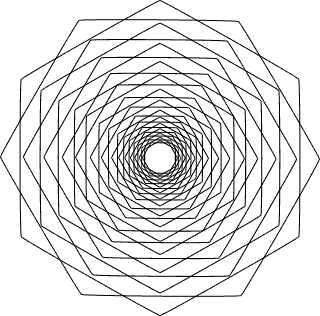
To put it simply, fractals are the same pattern repeating over and over, infinitely, to create a structure. Fractals are found everywhere in nature, in snowflakes, river systems, sea shells and even galaxies. They represent infinity or infinite possibilities. Some popular fractals you can use as symbols are the hexagon fractals like the doceda fractal or star fractals like the 5 or 8 sided star fractal.
17. Triple Moon symbol
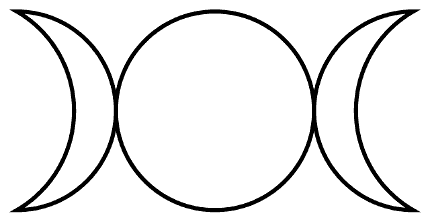
The Triple Moon symbol, also known as the Triple Goddess symbol, is one of the more prominent symbols used in Neopaganism, Paganism, and Wicca. The full moon surrounded by the waxing and waning crescents symbolize the Goddess, as well as the cycle of life, death, and rebirth.
The Triple Moon is commonly used amongst women as a symbol of empowerment as it also represents the three stages of a woman’s life; the maiden, the mother, and the crone. Feeling down? Use this symbol to boost your confidence and connect to the divine feminine within.
18. Dharma Chakra
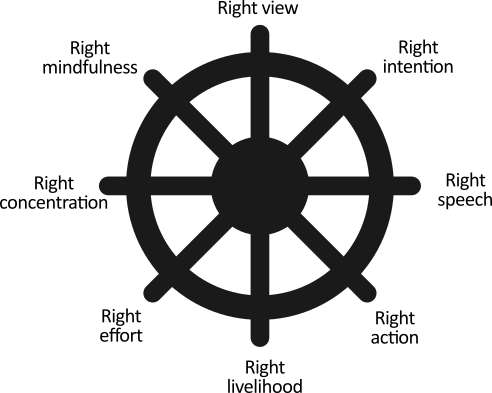
The Dharma Chakra is a highly sacred symbol of the Buddhist faith, as it represents the Buddha’s teachings. It is also commonly found in Hinduism and Jainism. Commonly known as the Dharma Wheel, it represents the path to Nirvana which is the highest level of spiritual enlightenment a person can achieve.
There are numerous variations of the Dharma wheel; ranging from 8 to 24 spoked designs, with each spoke representing a different aspect of the teachings of Buddha. In general terms, it is primarily understood to represent wisdom, insight, and knowledge. Use this symbol if you are feeling emotionally out of balance or overwhelmed, to promote peace of mind and harmony within yourself.
19. Pentagram
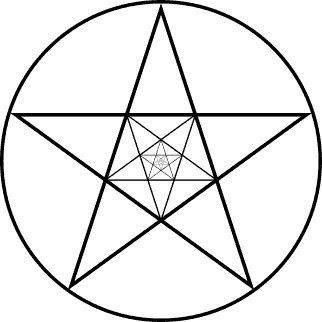
The Pentagram has been found on pottery pieces dating back as far as 3500BC, in the Chaldees of Ancient Mesopotamia. Today, it is commonly worn by witches and pagans to represent the four elements of earth, air, fire, and water, as well as the divine spirit. In Wicca, it is often used in banishing rituals, which makes it an extremely powerful protective symbol to guard you against negative influences.
20. Witch’s Knot
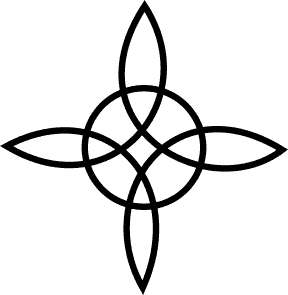
The Witch’s Knot is a symbol that has been around for centuries, as a means of warding off evil. Within the knot is a circle which is a common symbol of protection. The Witch’s Knot is a symbolic representation of the knot magic that was practiced by witches in the Middles Ages, which was often scratched on the doors of homes and stables.
The process of tying knots in a cord or a piece of rope was a way to bind a witch’s intention in a spell, or to release energy when untied. Many witches still use knots in their practices today, however, it can also be used simply as a protection symbol for the home or for yourself.
21. Ankh
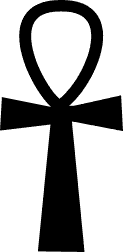
The Ankh is an Ancient Egyptian hieroglyph meaning ‘life’ and was often used in phrases that expressed positivity. It is also thought to be a symbol of fertility and the continuation of life after death. Today, the use of the Ankh symbol is widespread and can be found in many forms on contemporary jewelry.
The significance of the shape of the Ankh has been heavily debated but perhaps the most widely accepted theory is that it represents a knot. This is certainly possible as the knot is also a symbol associated with everlasting life and continuity. Its’ long history has made the Ankh a common symbol of positivity and health across the globe.
22. Enso
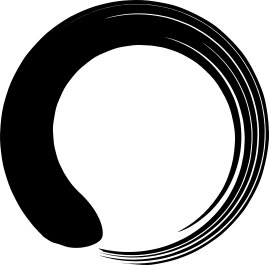
The Enso is a Japanese symbol of enlightenment that dates back to the 6th Century. It is also particularly revered in Buddhist cultures. The word Enso roughly translates to ‘Zen circle’ and can either be drawn as a complete circle (which represents perfection or enlightenment) or an incomplete circle that allows the creator to develop further.
In the latter form, it can also represent the beauty of imperfection which makes it a great symbol to boost confidence and help you to achieve inner harmony.
23. Tree of Life
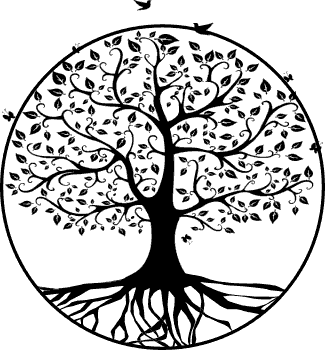
The Tree of Life has a long history across multiple cultures. The oldest known example of this symbol, found in Turkey, dates back to around 7000BC and it has only grown in popularity since then. It is often viewed as a symbol of serenity, positive health, and the deep interconnectedness that exists between people and the earth.
It is also seen as a powerful symbol of personal growth as trees continue to grow throughout their entire lives.
24. Triquetra
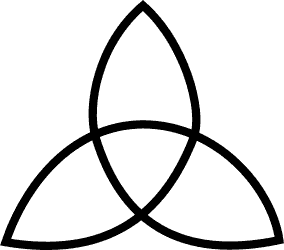
Triquetra means ‘triangle’ or ‘three-cornered’. Therefore, this symbol often has 3-fold meanings across numerous cultures; in Christianity it has come to represent the Holy Trinity, whereas Pagans use it to symbolize the three aspects of the Goddess (Maiden, Mother, and Crone). The symbols’ exact origin is a mystery but many scholars believe it to be Celtic and is thought to date back to around 500BC.
Today it is considered to be a powerful symbol of balance that can be interpreted in many ways such as the ‘past, present and future’, or ‘thought, feeling, emotion’ – it all depends on what you believe this symbol represents for you!
In brief, if your life could use a little more luck, abundance, or positivity, it can’t hurt to get to know any of these ten beautiful symbols a little better. All of these symbols have been used since ancient times to remind people of their infinite, abundant nature; if this sounds like something you need in your life, pick the symbol that you resonate most with, and keep it near you as a daily reminder!