39 Symbols of Spiritual Awakening & Enlightenment

Spiritual awakening symbols

Spiritual awakening is the process of becoming aware of your true nature and the deeper reality beyond everyday perception. It involves a shift in consciousness, where you begin to see beyond habits, identities, and the surface level of life.

Across cultures and traditions, certain symbols have been used to represent this inner journey. Each one reflects a different aspect of awakening, from transformation and balance to insight and higher awareness.

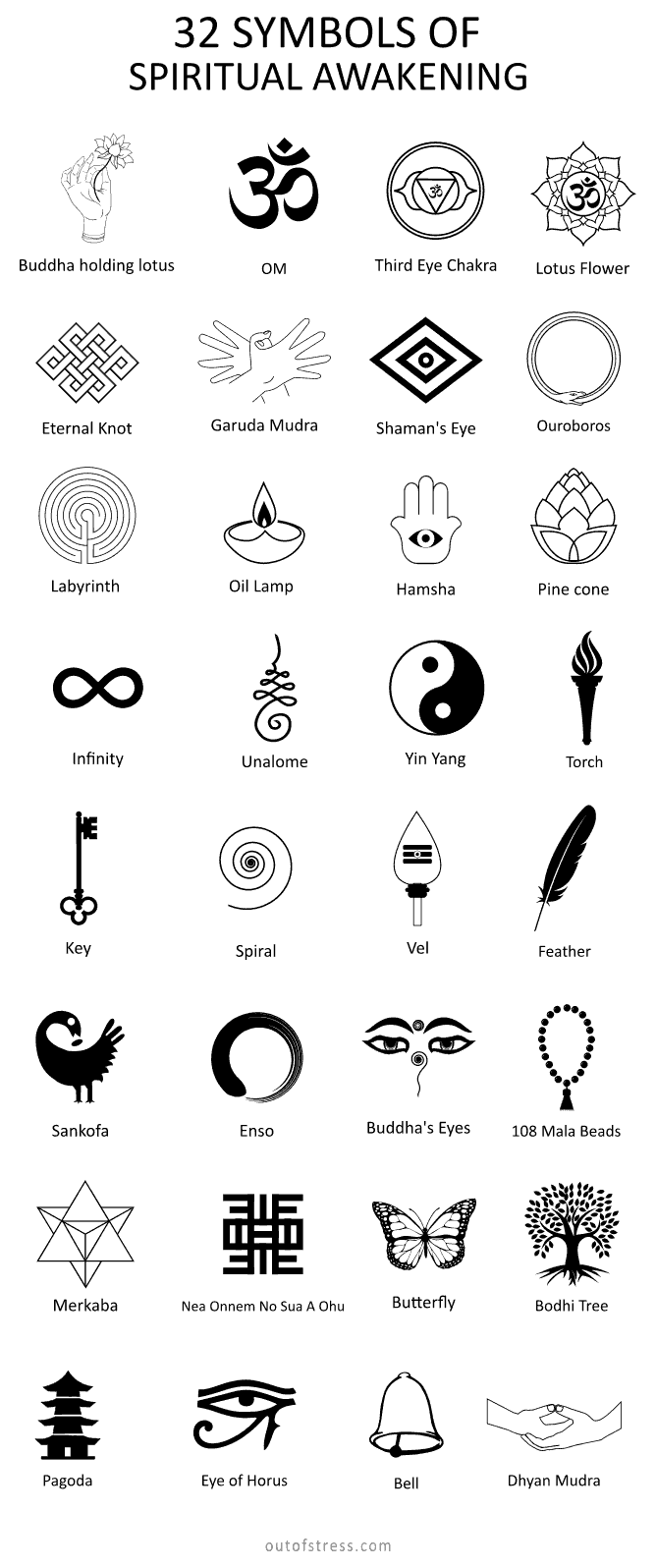
Here are 39 ancient symbols that represent spiritual awakening and the path toward deeper consciousness.

39 symbols of spiritual awakening

1. Pine Cones

pinecone-pineal-gland

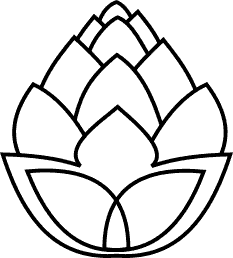
In many ancient traditions, pine cones are linked to the pineal gland. The pineal gland is called the “third eye,” associated with inner vision, awareness and awakening.

In fact, the word pineal comes from the Latin pinea, meaning “pine cone.” And this isn’t without reason. The pineal gland is shaped like a small pine cone and sits deep in the center of the brain.

Scientifically, it regulates the sleep cycle by secreting melatonin. In spiritual traditions such as Hinduism, it is believed that this gland becomes more active as one meditates by focusing on the center of the forehead. With consistent practice, this is said to allow the meditator to access higher states of perception and deeper insight.

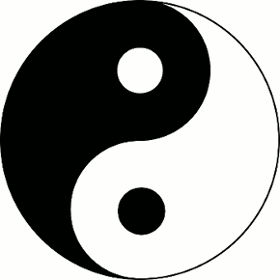
2. Yin Yang WU Ji Point

Yin Yang parts meanings

The Yin Yang is an ancient Chinese symbol that depicts existence as an interplay between two separate yet interconnected forces. These are the divine masculine, represented by the black half, and the divine feminine, represented by the white half. Each becomes dominant or receptive at different moments, creating the ever-changing, cyclical nature of life.

What’s powerful is that within the Yin Yang lies a central point associated with the concept of Wu Ji, the state of neutrality and stillness. This is the space beyond polarity, where one is untouched by the constant movement of opposing energies.

WU Ji can be experienced during deep meditation or moments of heightened awareness and presence. In this sense, Wu Ji points to the essence of spiritual awakening, a return to inner stillness that is beyond duality.

Read more about the Secrets of the Yin Yang.

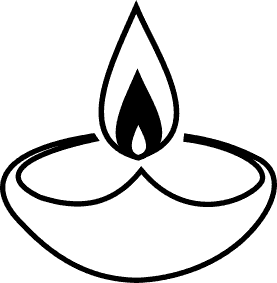
3. Diya (Earthen Oil Lamp)

Diya - Oil Lamp symbol

A diya is a traditional oil lamp widely used in India, especially in rituals and festivals. Typically made of clay, it is filled with oil or ghee and lit with a cotton wick. It symbolizes the victory of light over darkness and knowledge over ignorance. The flame represents awareness, clarity, and the presence of the divine.

In ancient practices, the flame of the diya was also used for Trataka, a yogic technique of steady gazing. By focusing the eyes on the flame without blinking, practitioners trained the mind to become still and concentrated. This lead to heightened awareness and inner clarity.

Thus the diya can be seen as a powerful symbol of spiritual enlightenment.

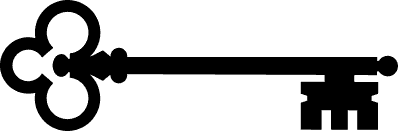
4. Key

Key symbol

Keys have been used as status symbols for power and authority throughout history. Yet these objects have a much deeper meaning.

The basic function of a key is to unlock doors. Metaphorically, it represents the right insight that opens inner awareness and unlocks higher states of consciousness. In this sense, keys become symbols of spiritual awakening and liberation.

Even historically, skeleton keys have been widely used as amulets to assist the wearer in seeing the possibilities and opportunities in life.

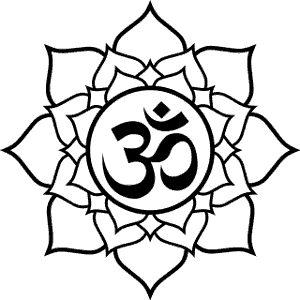
5. Lotus

Lotus flower

The lotus flower is associated with spiritual awakening because it rises from muddy waters yet blooms pure and untouched. This journey mirrors the path of inner growth, where clarity and awareness emerge from ignorance, confusion and struggle.

In traditions like Hinduism and Buddhism, the lotus represents the unfolding of consciousness, with each petal symbolizing expansion into higher awareness.

Even the crown chakra, regarded as the highest energy center at the top of the head, is called Sahasrara in Sanskrit. The word Sahasrara translates to a “thousand-petaled lotus,” and the chakra is traditionally depicted as a lotus with many petals.

Sahasrara Yantra with OM at the center

This chakra is associated with pure consciousness, spiritual enlightenment, and unity with the divine.

6. Feather

Feather symbol

Feathers are seen as symbols of spiritual awakening because they represent lightness, elevation, and a connection to higher realms. Feathers allow birds to rise above the earth, and hence mirror the mind’s ability to raise above limitations and gain a higher perspective.

They remind you to stay aligned with a higher awareness rather than being weighed down by the material world.

In many traditions, feathers are also seen as signs of guidance and presence. If a feather suddenly drops from the sky, it is believed to be a gift from a higher power. In Native American tribes, feathers were regarded as the link between heaven and earth so people often used them to directly connect with the divine. This belief is likely due to the fact that birds fly high up in the sky so they are closer to God.

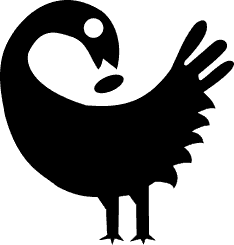
7. Sankofa (Adinkra)

Sankofa symbol

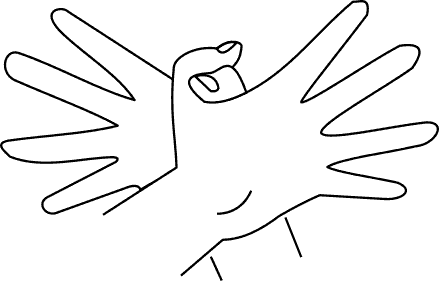
The Sankofa is an Adinkra symbol, depicted as a bird with its head turned back towards its body. The word Sankofa simply means ‘go back and get it’.

This represents self reflection or consciously reflecting on your past, your accumulated beliefs and habits to understand yourself from a deeper perspective. This conscious reflection becomes the basis for higher awareness and spiritual awakening.

8. Meditating Buddha

buddha meditation hand symbol

Gautama Buddha was born into a life of comfort and privilege, yet chose to renounce wealth, status, and worldly pleasures in search of deeper truth. Turning inward, he pursued understanding beyond the material world and, through deep meditation, attained enlightenment.

He represents spiritual awakening because his journey shows that true fulfillment is not found outside, but within. His life reflects the shift from external seeking to inner realization, from illusion to clarity.

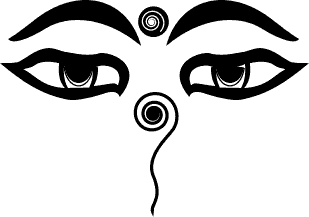
9. Buddha’s eyes

Buddha's eyes

On virtually every Buddhist Shrine, you will find a pair of Buddha’s eyes staring out at the world from all four sides of the building. These eyes represent the all-knowing, omniscient power of Buddha.

In human terms, Buddhists believe that the material eyes look at the external world, whereas the inner eyes can see beyond our material world.

10. Spiral Sun

Spiral sun
Spiral sun

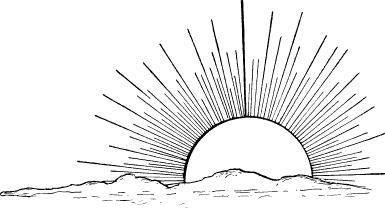
The sun represents the conscious mind, while the moon symbolizes the hidden subconscious. Enlightenment is the process of using the conscious mind (or sun) to illuminate the unconscious (the moon). Thus the sun is a powerful symbol of spiritual enlightenment.

The sun is also linked to the pineal gland, associated with inner awareness and the “third eye.” It was believed that practices like sun gazing (at safe times, such as sunrise or sunset) helped decalcify and stimulate the pineal gland leading to higher awareness. 

The spiral sun in particular is a symbol found in various ancient cultures, including Native American traditions that  symbolizes the continuous expansion of consciousness like the radiating energy of the sun.

Many traditions also associate the sun with knowledge, the light of truth, joy, and the higher self.

11. Solar Cross

Solar cross
Solar cross

The solar cross is an ancient sun symbol featuring a cross enclosed within a circle.

The vertical line symbolizes the divine masculine, while the horizontal line represents the divine feminine. Their intersection at the center reflects the union of these energies, pointing to balance, wholeness, and spiritual awakening.

12. Vesica Piscis

Vesica piscis symbol

The Vesica Piscis is an ancient sacred geometry symbol formed by two overlapping circles, where each circle passes through the center of the other.

These circles represent the dual nature of existence, seen as the divine masculine and feminine, as well as the balance between the right (analytical) and left (intuitive), and the conscious and subconscious aspects of the mind.

Their intersection creates a lens-like shape at the center. This form, resembling an eye or portal, is associated with the third eye, pointing to awareness beyond the material world.

In this sense, the symbol suggests that higher perception arises when opposing forces are brought into balance. The Vesica Piscis thus represents the union of opposites and the emergence of higher consciousness, making it a powerful symbol of spiritual awakening.

13. Ankh

Ankh awakening symbol

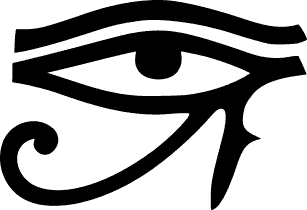
The Eye of Ra, the Eye of Horus, and the Ankh are symbols from ancient Egypt, each carrying deep spiritual meaning.

The Eye of Ra represents solar energy, divine masculine, and the analytical/conscious mind. The Eye of Horus, on the other hand represents lunar energy, divine feminine, intuition, and the subconscious mind. Together, these two eyes can be understood as complementary forces, outer and inner, logic and intuition.

The Ankh is a symbol that represents the merging of these two eyes, Its looped top and cross-like form are seen as the meeting of spiritual and material realms. In a deeper sense, the Ankh represents access to higher awareness. This aligns it with ideas of awakening and expanded consciousness.

Many Egyptian deities are depicted holding the Ankh, including Osiris, who represents resurrection and eternal life, Isis, the goddess of wisdom and healing, and Anubis, associated with transition and the afterlife. The Ankh in their hands signifies the power to give and sustain life.

Beyond this, the Ankh also represents immortality, the life force, balance between male and female energies, and the connection between the earthly and the divine.

14. Hexagram

Regular hexagram
Regular hexagram

Just like the Vesica Piscis, the hexagram carries a similar symbolism of union and balance. It is formed by two equilateral triangles, one pointing upward and the other downward, meeting at the center. The upward triangle represents the divine masculine, while the downward triangle represents the divine feminine.

Hexagram construction

Their intersection at the center symbolizes the point of harmony and integration, where opposing energies come into balance.

This central union points to a state of higher awareness, where duality dissolves and a deeper sense of wholeness and consciousness emerges.

15. Merkaba

Merkaba symbol

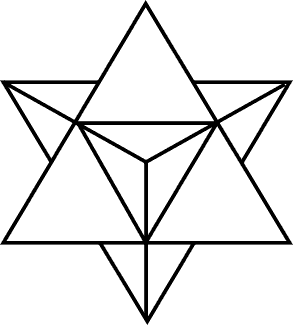
The Merkaba is the three-dimensional form of the hexagram (that we saw earlier) and is regarded as a powerful symbol of ascension. This star is made of two interconnected tetrahedrons. One tetrahedron faces up and rotates clockwise representing the divine masculine while the other faces down and rotates counterclockwise repressing the divine feminine.

Since ancient times, this star-shaped form has been associated with raising one’s energy and supporting the process of spiritual awakening.

Also, the term Merkaba represents the integration of all aspects of being, and is described as three parts: Mer (light), Ka (the spirit), and Ba (the physical body). It points to the alignment of body, mind, and spirit as a path toward higher consciousness.

16. Butterfly

Spiritual butterfly with Sun and Moon

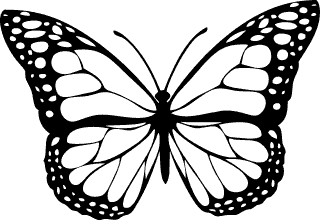
The transformation of a caterpillar into a butterfly is often seen as a symbol of spiritual awakening.

The caterpillar represents an unconscious, limited state of being, while the metamorphosis it undergoes reflects the inner process of change, which is marked by periods of isolation, solitude, and deep self-reflection.

The emergence as a butterfly, with its wings and ability to fly, symbolizes transcendence, rising beyond the material world and stepping into a higher state of awareness and freedom.

17. Dragonflies

Spiritual dragonfly

Dragonflies spend a large part of their lives in water as nymphs. But a time comes when their shed their nymph skin and start to fly as fully grown dragonflies.

The nymph represents an unconscious state, while the shedding reflects the letting go of old identities through self-reflection and inner inquiry. As it takes flight, the dragonfly symbolizes transcendence, rising beyond limitations and accessing higher consciousness.

In this way, it represents both awakening and liberation.

18. Nea Onnem No Sua A Ohu (Adinkra symbol)
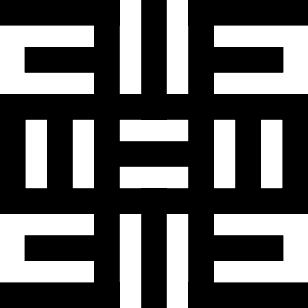
Nea Onnem No Sua A Ohu

Nea Onnim No Sua A, Ohu translates to “He who does not know can know from learning.” The symbol conveys that spiritual awakening is not reserved for a chosen few, but is available to anyone willing to seek and learn.

It also reminds us that awakening is a continuous process. Through ongoing self-reflection and inquiry, one gradually deepens their understanding of the universe and their own infinite nature.

19. Infinity

Infinity symbol


The infinity symbol is an ancient representation of eternity, balance, and the continuous flow of creation.

Its two loops reflect the dual aspects of existence or the divine masculine and divine feminine. Their intersection at the center represents a point of stillness or neutrality. It points to pure consciousness beyond duality, a state often experienced in deep meditation when one moves beyond the ego. In this way, the infinity symbol becomes a powerful representation of spiritual awakening and unity.

The infinity symbol is said to have been created by Thoth; the God of science, art, and wisdom, and was commonly worn atop crowns by Ancient Egyptian pharaohs.

20. Equilateral Triangle

Equilateral triangle depicting spiritual awakening

The equilateral triangle is a powerful symbol representing the trinity of mind, body, and spirit.

In-fact, the All-Seeing Eye symbol, that depicts an eye at the center of the equilateral triangle reflects this balance. It suggests that when the mind, body, and spirit are in alignment, especially in deep meditative states, one gains access to higher awareness and deeper insight, symbolized by the eye.

21. Dhayna Mudra

Dhyna mudra

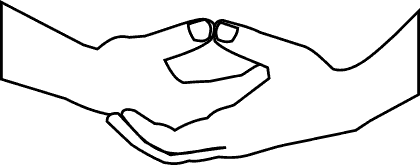
The Dhyana (concentration) mudra is a powerful hand gesture in yogic traditions, performed by placing the right hand over the left, with the thumbs lightly touching.

The thumbs are said to represent the fire element, and when they connect, they form an energetic circuit within the body. This is believed to help the body settle into a calm, parasympathetic state, making meditation and concentration easier.

In this relaxed and focused state, the mind becomes more still and receptive, allowing deeper awareness to arise. For this reason, the Dhyana mudra is closely associated with spiritual awakening and enlightenment.

The Buddha is often depicted holding this gesture, symbolizing deep meditation, inner stillness, and the state of awakening.

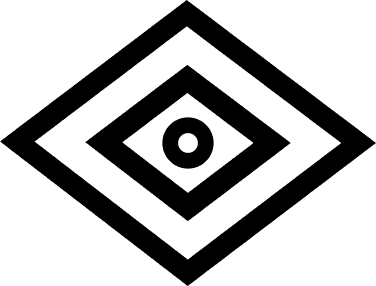
22. Shaman’s Eye

Shaman's Eye symbol

The Shaman’s Eye is a Native American symbol that represents deeper vision and intuition to see things beyond the material world and into the world of the formless consciousness.

23. Spiral

Clockwise spiral
Clockwise spiral

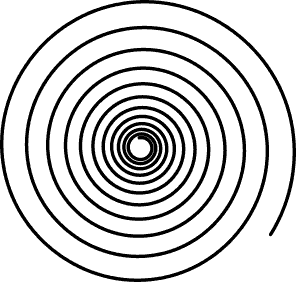
Spirals can be moved from the outside inward or from the inside outward, which is why they represent duality and flow. Moving inward toward the center represents the journey within, accessing the inner or spiritual self. Moving outward represents accessing material world while still staying connected to the center.

Thus, the spiral represents a connection between the outer world and inner world. An awakened individual lives in between these worlds in perpetual balance.

24. Third Eye Spiral

Third Eye Chakra Spiral

Spirals can be drawn clockwise as well as counterclockwise, representing two opposing yet complementary movements.

The clockwise spiral is associated with the right, intuitive aspect of the mind, while the counterclockwise spiral is linked to the left, analytical aspect. When these two movements are brought together, they create a balanced, lens-like center (as shown in the image above) that symbolizes the third eye.

This represents the integration of intuition and logic, leading to higher insight and spiritual awakening.

25. Pyramids

Pyramid symbol

Pyramids have long been associated with spiritual evolution. The square base represents the material world, while the apex at the top symbolizes higher consciousness and spiritual attainment.

As one rises toward the apex, it represents a journey from the physical to the spiritual. Reaching the top signifies gaining a higher perspective, where one can see beyond limitations and perceive life with greater clarity and awareness.

26. Bodhi tree or Leaf

Bodhi tree enlightenment

The Bodhi tree (Tree of Awakening) is a sacred symbol in Buddhism that represents the journey toward spiritual awakening. It refers to the peepal tree under which Gautama Buddha is said to have attained enlightenment. In fact, the word Bodhi in Sanskrit and Pali means awakening or enlightenment.

More broadly, meditating under trees has been an ancient practice. Teachers and seekers often chose trees to sit or meditate under, using their natural calm to turn inward or share wisdom. 

27. Valknut

Valknut symbol

The Valknut is considered an ancient Norse symbol, though its origins may be even older. It features three interlocking, upward-pointing equilateral triangles, each passing through the center of the others. The three triangles are seen as representing the trinity of mind, body, and spirit.

The small central triangle formed by their union symbolizes higher awareness, where these aspects come into alignment, leading to deeper consciousness and awakening.

28. Tetractys

Tetrad (Tetractys) triangle symbol

The Tetractys is a sacred Pythagorean symbol formed by ten dots arranged in a triangular pattern across four rows.

The bottom row of four dots represents the physical world, built from the four elements: fire, air, water, and earth. Moving upward, the next row of three dots symbolizes the trinity of mind, body, and soul. Above that, the two dots represent duality, the fundamental opposites present in existence. At the top, the single dot signifies unity, the realization of oneness beyond duality.

In this way, the Tetractys represents a journey from the material world to higher consciousness, making it a powerful symbol of spiritual awakening.

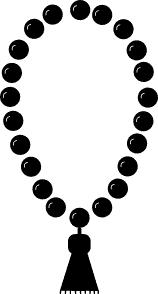
29. Mala beads

108 mala beads

A mala is a string of beads commonly used in Japa, or mantra meditation, which is said to elevate the mind and guide it toward higher states of awareness and consciousness. During meditation, the practitioner holds the mala in the hand and moves through  each bead while maintaining focus, helping anchor the mind and deepen concentration.

Most mala beads have 109 beads (108 + 1 guru bead), and completing one full round is considered a complete cycle of meditation or mantra repetition. The number 108 is regarded as sacred in traditions like Hinduism and Buddhism, where it is associated with spiritual completeness.

Mala beads can also be worn as jewelry to assist spiritual development. They are commonly used in both Hinduism and Buddhist cultures.

30. Third Eye Chakra

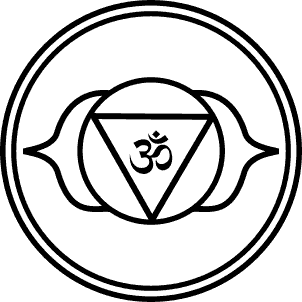
Third Eye Chakra icon

The concept of the Third Eye appears across many ancient traditions, including Hinduism, Buddhism, Ancient Egypt, and various Native American cultures.

These traditions describe the third eye as a form of inner vision that allows one to see beyond the limitations of the physical world. It is seen as a gateway to spiritual awakening, higher consciousness, and deeper insight.

Most traditions believe that the third eye is located between the two physical eyes and is often equated with the pineal gland (a symbol we saw earlier).

31. Mirror

A mirror stands for self reflection or looking at and understanding your own self. Awakening begins the moment you start to understand yourself.

32. Vajra

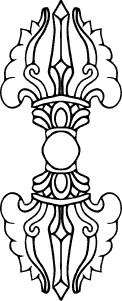
Vajra symbol

Vajra as a spiritual instrument has been found in many religious and cultures across the world. A vajra represents spiritual power, symmetry and perfection. It also stands for the male principle. The Vajra along with the bell (which is the female principle) is said to represent enlightenment.

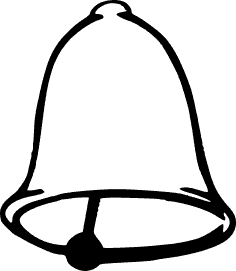
33. Bell or Gong

Temple bell icon

Bells are associated with the expansion of consciousness. In Tibetan Buddhism the Bell is always used along with a Vajra. Together these instruments are said to symbolize enlightenment.

34. Hamsa

Hamsa hand with eye

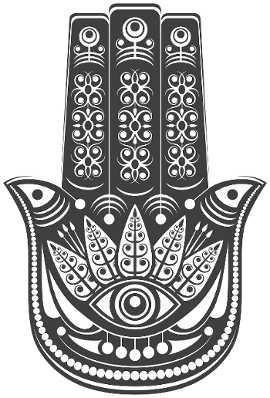
The Hamsa is a hand-shaped symbol that is highly regarded as one of the most potent protection amulets in the world. The five fingers represent the five senses and the eye in the center of the palm is said to ward against evil spirits.

The eye at the center also represents the third eye or the eye that sees beyond the limitations of the material world. This is why the hamsa can also be seen as a symbol of spiritual awakening.

35. Torch

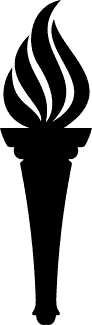
Torch symbol

Awakening is about shining the light of consciousness over that which is unconscious. And hence a torch is a powerful symbol of awakening. In many cultures, the torch is a symbol of freedom, inspiration and knowledge. The torch is also associated with the conscious mind.

36. Ouroboros

Ouroboros symbol

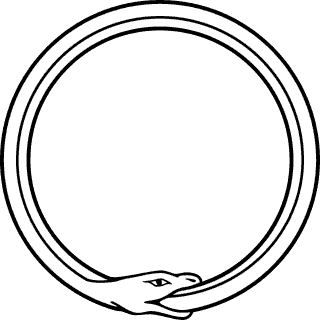
The Ouroboros is an Ancient Egyptian symbol depicting a snake or serpent eating its own tail. The shape forms a complete circle which is associated with the cycle of life, death, and rebirth. It represents the core truth of the universe which is that life consumes life in a never-ending cycle. This is one of the primary truths that one realizes as one awakens. 

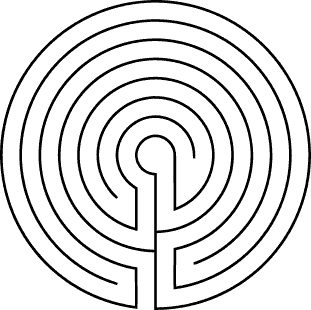
37. Labyrinth

Labyrinth symbol

The first labyrinth was believed to have been created in Ancient Greece by architect Daedalus to trap a deadly Minotaur. Since then, labyrinths have become known as powerful symbols of the spiritual journey. Entering a maze (either physically or mentally) is thought to call on your intuitive powers to promote self-discovery and achieve spiritual enlightenment.

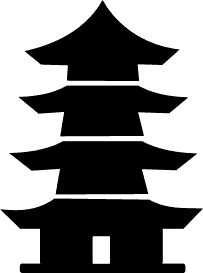
38. Pagoda

Pagoda symbol

A Pagoda is a tiered tower structure each tower representing an element of nature. The pagoda symbolizes wisdom, peace, harmony, stability, and the path to higher consciousness and understanding.

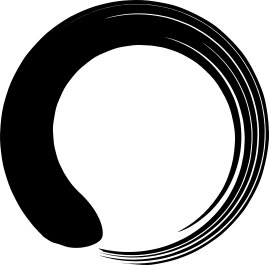
39. Enso

Enso symbol

The Enso is a popular symbol in Buddhist and Japanese cultures, depicted as an open or closed circle created with one single brushstroke.

It symbolizes awakening and enlightenment by representing a state of complete presence, where the mind is free, whole, and beyond duality.

Conclusion

Spiritual awakening is not a single moment, but an ongoing journey of awareness, growth, and inner transformation. These symbols serve as reminders of that path, each pointing to a deeper truth about life and consciousness. 

While the symbols may differ across cultures, the essence remains the same: to move beyond limitation, find balance within, and reconnect with a higher state of being. Ultimately, the real meaning of these symbols is not just to be understood, but to be experienced.


You may also like...
About the Author
Carla is a writer, author and a practicing Wiccan for the last twenty years and loves anything to do with nature and spirituality! She lives in Cambridge UK, with her two daughters and husband. When she is not working she has a special interest in creative writing, with two novels in progress.
About Outofstress.com (ReflectEvolve)
ReflectEvolve provides down to earth, thought provoking content to inspire higher thinking, infuse positive energy, expand consciousness and promote self awareness.
Follow us on Faceboook | Pinterest | YouTube .

Please note that Outofstress.com will be changing to ReflectEvolve.com soon. Kindly update your bookmarks.
Subscribe to our newsletter
Get notified of new articles by subscribing to our newsletter. Sent once a month.